Is Handwriting Analysis a Real Science or Just an Opinion?
This is a question I get a lot, and it’s a fair one. People hear the word “opinion” and assume it means guesswork. In court, though, expert opinion is exactly what the system is built around. Psychologists give opinions. Medical examiners give opinions. Fingerprint and shoe impression experts give opinions. The key issue isn’t whether it’s an opinion. It’s what that opinion is based on.
Handwriting and document examination are part of forensic science. The conclusions are opinions, yes, but they are opinions grounded in evidence, testing, and a defined process. When the proper procedures are followed and the same evidence is examined, trained experts should reach the same conclusion. That’s what separates science from guesswork.
In court, the jury doesn’t get facts handed to them in a vacuum. They get opinions from people who are qualified to interpret evidence. That’s what an expert witness does. The value of that opinion comes from the work behind it.
If I examine a photograph and conclude it’s been altered, that conclusion is my professional opinion. But it’s based on what I did to reach it. The tools I used. The tests I ran. The evidence I reviewed. The same thing applies to handwriting and document examination.

Forensic document examination is a subset of forensic science. It’s taught at universities under forensic science programs. It requires specific training, and you have to be qualified before a judge will allow you to testify.
So no, it’s not just someone “looking at it” and making something up.
I remember being cross-examined by an attorney after I had spent about forty-five minutes explaining everything I did in a case. Side-by-side comparisons. Photoshop analysis. Metadata review. Document properties. Text messages. Photographs. All of it.
After all that, he said, “But in the end, you just looked at it, and that’s your opinion.”
What he was trying to do was diminish the work by calling it “just an opinion.” But that opinion was built on evidence. A lot of it.
- That’s how this works.
- The opinion is the conclusion.
- The science is the process used to get there.
There are published procedures in the legal and forensic fields that explain how to analyze altered documents and questioned signatures. It’s a defined process. And that’s an important distinction.
One practical way to think about the difference between art and science is this: if two qualified people follow the same procedure and look at the same evidence, they should reach the same result. That’s science.
Which raises another common question. If this is a science, why do experts sometimes disagree?
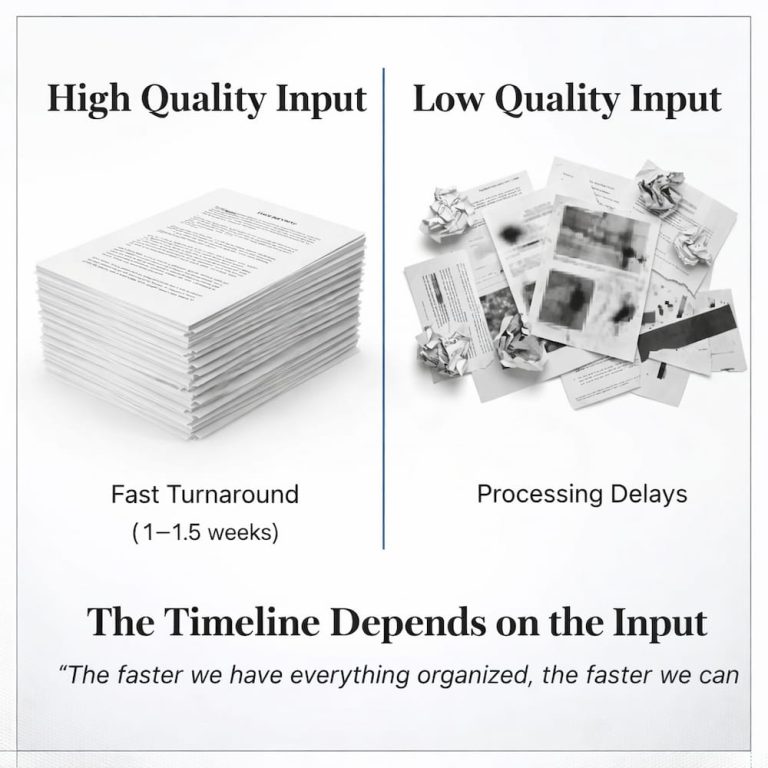
Most of the time, it comes down to evidence. They didn’t see the same material. One expert may have originals. Another may only have low-quality copies. Or they may not have access to the same supporting documents.
It’s like two people visiting a crime scene, but one only sees the basement and the other only sees the upstairs. They were both there, but they didn’t examine the same thing.
When ethical experts are shown all of the same evidence, something interesting usually happens. One of them changes their opinion.
I’ve seen that more than once. In one case in Florida, an examiner I respect concluded that a signature probably wasn’t genuine, but he wasn’t certain. When my report came in with color photographs, originals, microscopic images, and clear explanations of the writing habits, he withdrew. Not because of ego or argument, but because the evidence was clearer.
That’s how it’s supposed to work.
In the U.S., each side is allowed to hire its own expert. You can have independent handwriting experts, fingerprint experts, blood experts, and so on. In parts of Europe, the courts often rely on a single agreed-upon expert, and both sides accept that conclusion.
I like the idea in theory. It saves money. But it only works if the expert is good and follows the process correctly. I’ve seen what happens when they don’t.
Most cases never make it to trial for a simple reason. When the evidence is laid out clearly, the truth becomes hard to argue with. Cases settle. Positions change.
I’ve even shown up to court ready to testify, only to be told I wasn’t needed because the other side decided not to contest the issue once they realized I was involved. That happens.
So yes, handwriting experts give opinions. Judges understand that experts are human, have biases, and bring their own experience to the table. But when someone is truly qualified, the court wants that opinion.
One of my early mentors, Dan Pointer, became an expert witness in parachuting accidents. There’s no formal school for that. But when you’ve done hundreds of jumps and taught others to do the same, your experience matters. His opinions were trusted because they were grounded in real-world knowledge and a clear understanding of the process.
That’s what an expert is.
If you need help in the handwriting or document examination field, you can visit HandwritingExperts.com or HandwritingExpertUSA.com. We can help you find someone appropriate for your case and your budget. You don’t always need the biggest name in the field. Sometimes you just need the right qualified expert.
Thanks for reading. I’ll continue sharing more about fraud, document analysis, and real cases as they come up.