What’s the First Thing to Do If You Suspect a Forged or Altered Document?
If you suspect a document has been forged, altered, or manipulated, the first and most important step is simple:
Contact a court-qualified forensic document examiner immediately.
When a signature, contract, will, lease, or deed is being used against you—and money, property, or legal rights are at stake—timing and expertise matter.
Why Hiring a Forensic Document Examiner Is the First Step
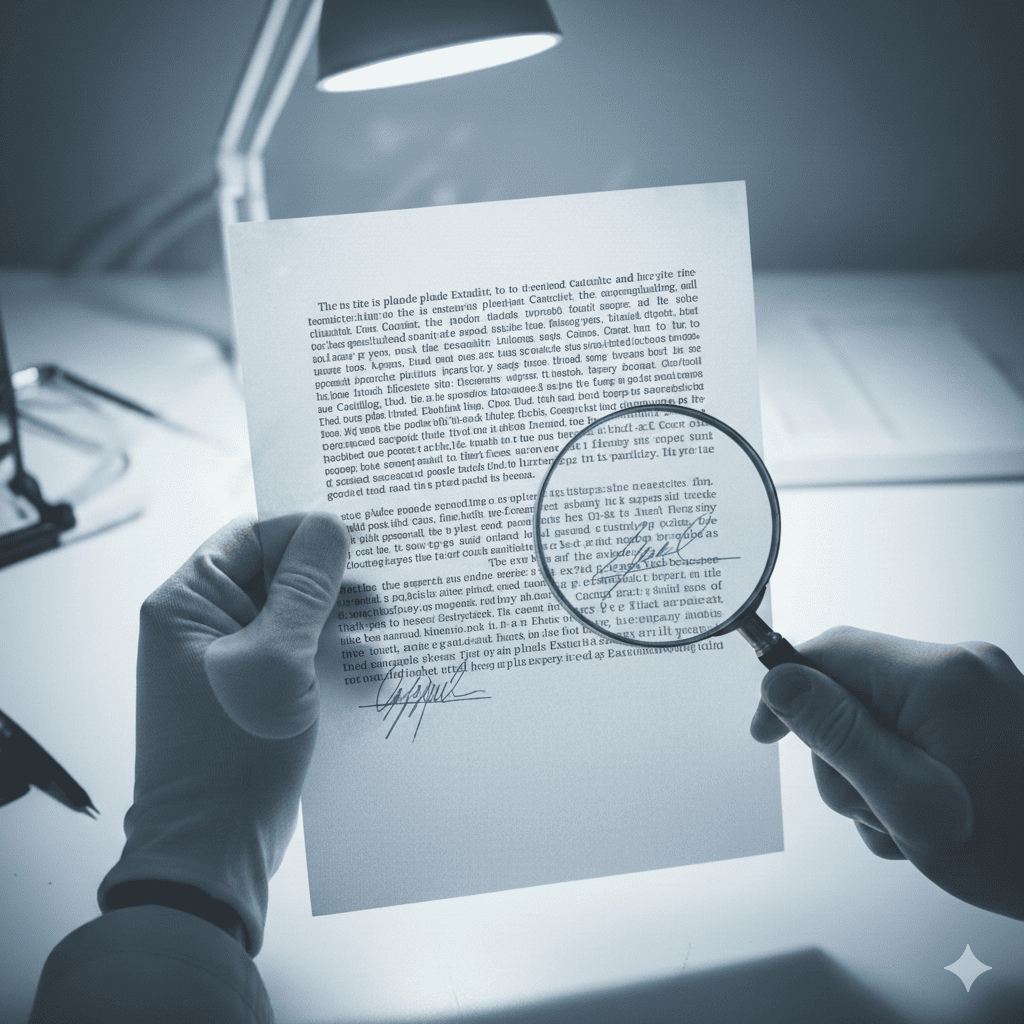 Attorneys rely on forensic handwriting experts to determine whether a document is authentic before building a legal strategy. Without expert analysis, you’re arguing opinions. With expert analysis, you’re presenting evidence.
A qualified forensic document examiner can evaluate:
- Signature authenticity
- Page substitutions
- Ink and pressure patterns
- Digital cut-and-paste alterations
- Photoshop or PDF manipulation
- Whiteout, erasures, or chemical alterations
- Mismatched paper or printing inconsistencies
Modern forgeries are rarely obvious. Many are created using scanning software, Microsoft Word, or image editing tools and passed off as legitimate contracts, car titles, deeds, prenuptial agreements, wills, and leases.
Common Signs a Document Has Been Altered
1. Mismatched Paper or Formatting
If interior pages look different from the signature page, it may indicate page substitution.
2. Inconsistent Fonts or Spacing
Formatting inconsistencies are a classic sign of digital alteration.
3. Whiteout or Physical Erasures
Yes, people still attempt this. It is surprisingly common.
4. Digital Cut-and-Paste Signatures
Signatures are frequently lifted from one document and inserted into another.
5. Suspiciously Convenient Clauses
If a document suddenly benefits only one party—especially in estate disputes or landlord-tenant conflicts—further investigation is warranted.
What a Forensic Examination Provides
A comprehensive forensic document examination typically includes:
- Side-by-side signature comparison
- Microscopic ink and stroke analysis
- Paper and printer evaluation
- Digital artifact detection
- A written forensic report
- A sworn declaration or affidavit
- Expert testimony (in person or via Zoom)
This written forensic report becomes admissible evidence in court. In many cases, if fraud is proven, a judge may order the opposing party to reimburse expert and legal fees.
How to Find a Qualified Forensic Document Examiner
You can locate court-qualified experts through:
These professionals provide independent, objective analysis designed for courtroom use.
Final Answer
If you believe a document has been forged or altered, do not argue, speculate, or negotiate.
Hire a forensic document examiner immediately.
Evidence wins cases. Opinions do not.
Source transcript reference: :contentReference[oaicite:1]{index=1}
Author: Bart Baggett
Forensic Document Examiner | Expert Witness | Legal Consultant