How Do You Fight a Forged Will in a Probate Court?
When someone passes away and leaves behind an estate worth fighting over, you’d be surprised how quickly a forged will can appear.
My company handles both forged and non-forged documents, such as last wills and testaments. Typically, when someone passes away and they had money, property, or even a wedding ring, there’s a fight. And it’s often someone on the periphery—a caretaker, a long-lost relative, or a recent companion—who shows up with a will claiming everything. This may lead people to say something like, “Wait a second, I deserve a share of that estate.”
Why You Need an Attorney
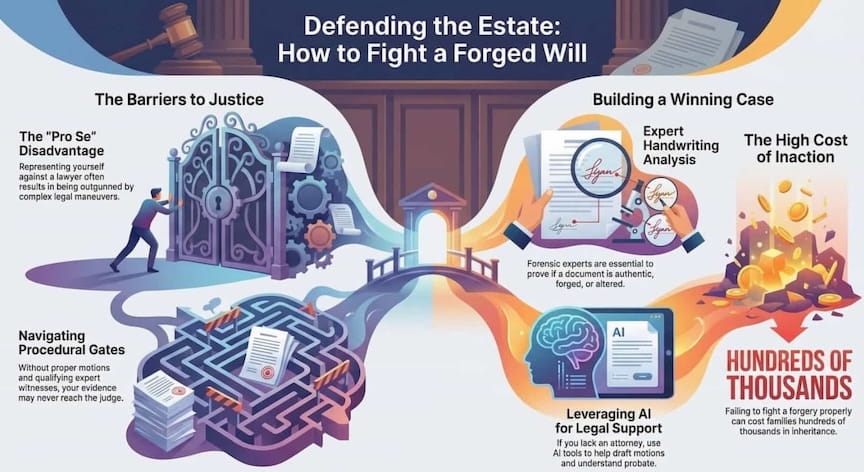
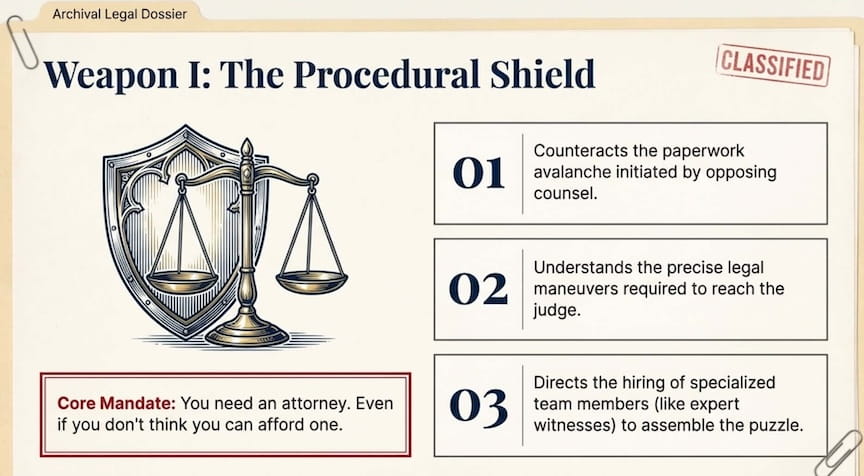
Generally, if you’re in probate court, there are some things you need to know. First of all, you really should get a lawyer, even if you don’t think you can afford one. Without legal representation, you are significantly outgunned by anyone who does have an attorney.
There are so many legal maneuvers that can occur that you may not even get a chance to speak to the judge. And that’s what people don’t understand: if you’re not in the legal field, you may have the perfect story, and you know what happened. But you have to prove it, and you can’t. You can’t even get a qualified expert witness if you don’t ask the right questions or pass voir dire. There are so many steps to even get in front of a judge or jury to hear these things. Most probate cases are heard by a judge in a bench trial rather than a jury, which makes the quality of your legal representation and expert witnesses even more critical.
However, they do want to be fair. I have seen judges with two pro se people in the court, meaning that they’re the families of the deceased person, and they’re all fighting. But the judge is being very careful to ask them questions and lead them, so as not to have it overturned on appeal. And the reason is that neither one of these knows the law.
But when one of them knows the law, and the other doesn’t, that’s a huge advantage. So if you don’t have a lawyer and the other guy does, you need to get an attorney. It’s important. And the attorney will tell you to hire someone like us, or one of our team members, who does nothing but expert witness work for a particular piece of the puzzle.
How a Forensic Document Examiner Fits In
In our cases, we examine the will and testament and determine whether it’s authentic, forged, or cut-and-pasted. Once that report is filed, the opposing side may challenge it by moving to have it excluded or by requesting an evidentiary hearing to contest its findings. If you’re unfamiliar with those terms, that’s exactly why having an attorney matters.
I have even recommended people without an attorney spend hours and hours on ChatGPT, using a prompt like, “Act as if you’re an attorney in California, in probate. How would you handle this?” I want to be clear: ChatGPT is not a substitute for a licensed attorney. But if you truly cannot afford one, going in with 90% of the right answers is far better than going in with none.
I’ve even had pro se clients use ChatGPT to help draft their motions so they can move the case along and get things excluded. Basically, if your opponent decides you’re going to get hammered with paperwork, you may never get to tell your story. This could happen even if the will was genuinely forged, even if it appeared out of nowhere two years after the person died, if you can’t navigate the procedural steps to get in front of a judge.
The Cost of Not Fighting Back
If you can afford a forensic handwriting expert or an expert witness, it’s going to really help your case as you move forward.
You could find yourself in probate court through no choice of your own because someone you loved passed away and left a mess behind. You have my sympathies. We often get into situations in the law that we didn’t want to get into, but the cost of not handling them properly can be hundreds of thousands of dollars, or, in some cases, half of an estate, which could be $1 million. Your entire side of the family could have that for generations to come if you know how to fight for it.
If you think a will in your case may have been forged, don’t wait. The sooner you get the right people involved, the better your chances of telling your story in court. Reach out to us at handwritingexpertusa.com.
Bart Baggett
The Nation’s Leading Forensic Handwriting Expert
CEO of Handwriting Experts Inc.
Forensic Document Examiner • Expert Witness • Legal Consultant
“We solve million-dollar forgery cases.”
Telephone: 1-800-980-9030
YouTube: @thehandwritingexpert
LinkedIn: bartbaggett
Facebook: bartbaggett
https://www.instagram.com/forensichandwritingexpert
https://www.tiktok.com/@handwritingexpertsinc
—————————————————————-
FAQ SECTION
—————————————————————-
Q1: Do I need a lawyer to contest a forged will in probate court?
A: Yes. Without legal representation, you are significantly outgunned by any opposing party who has an attorney. An attorney understands the procedural steps required to get your case before a judge and can help you retain qualified expert witnesses who can withstand voir dire and cross-examination.
Q2: What does a forensic document examiner do in a will contest case?
A: A forensic document examiner analyzes the will to determine whether it is authentic, forged, or cut-and-pasted. Their findings are submitted as an expert report that can be introduced as evidence in probate proceedings, and the opposing side may challenge it through an evidentiary hearing.
Q3: Can I use AI tools like ChatGPT if I cannot afford an attorney?
A: ChatGPT is not a substitute for a licensed attorney, but it can help pro se litigants understand procedural steps and draft motions. As the article notes, going into court with 90% of the right answers is far better than going in with none — though retaining counsel remains strongly recommended.
Q4: What is at stake financially if I do not properly contest a forged will?
A: The cost of failing to act can be hundreds of thousands of dollars — or in some cases, half an estate valued at $1 million or more. That is generational wealth your entire family could lose if the forgery goes unchallenged.