In December 2000, Los Angeles police received a cryptic, anonymous note. It contained just one word—‘cadaver’—and an address. That address led investigators to the body of Susan Berman, a close friend of real estate heir Robert Durst. For years, the question of who wrote the note hovered over the case. Durst insisted it couldn’t be him—after all, only the killer would know where to send police. But as the years passed, the note’s significance only grew.
Robert Durst denied writing the anonymous ‘cadaver’ note for years, but handwriting experts linked him to it—and in court, he finally admitted authorship. The note became pivotal evidence in his conviction for the murder of Susan Berman.
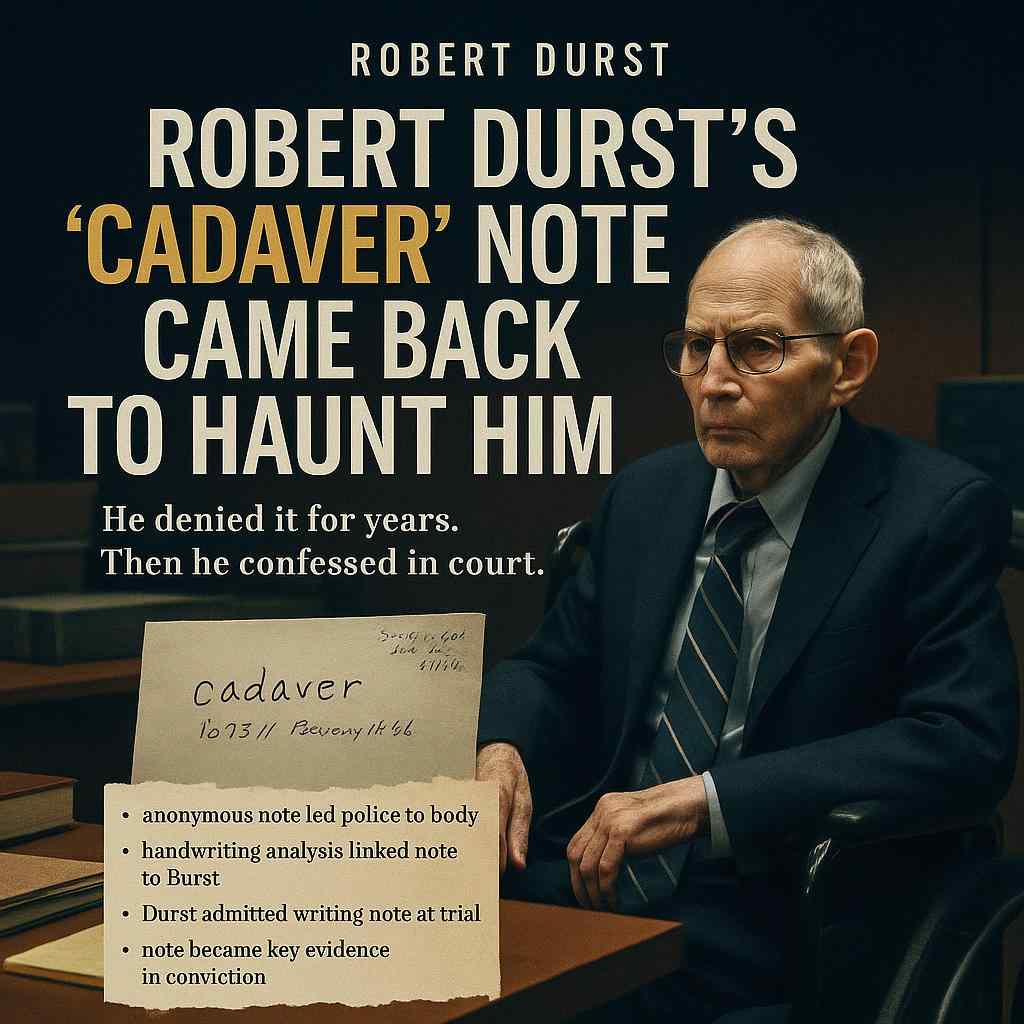
The Anonymous Note That Led to a Body
The story begins on a December day in 2000, when Beverly Hills police found a handwritten note in their mailbox. It simply read ‘cadaver’ and listed Susan Berman’s home address. The next day, officers discovered Berman’s body at that very location. The note was the only clue, and it immediately raised a chilling question: who would send police directly to a murder scene?
Susan Berman was more than just a crime victim—she was a confidante to Robert Durst, whose own wife Kathleen had vanished in 1982. Rumors swirled that Berman knew too much, and now she was dead, with only a single word and an address as evidence.
Years of Denial—and a Breakthrough
For years, Durst denied any connection to the note. He insisted that only the murderer could have written it, and he was not that person. But the investigation pressed on, and the note itself became a focal point. Its style, its spelling, and its handwriting would all come under scrutiny.
In a twist worthy of a true crime thriller, the HBO documentary ‘The Jinx’ drew attention to similarities between the ‘cadaver’ note and a letter Durst had sent to Berman years before. Both documents shared the same unusual misspelling of ‘Beverly’ as ‘Beverley.’ This detail, along with others, prompted renewed interest—and experts in handwriting analysis were called in to compare the documents.
How Handwriting Experts Approach a Case Like This
When a case hinges on a handwritten note, forensic document examiners look for a range of features in the writing. They compare letter shapes, slant, spacing, pressure, and unique quirks—like that ‘Beverley’ misspelling. The goal is to determine whether the same person likely authored both documents.
In the Durst case, experts compared the ‘cadaver’ note to known samples of his handwriting. They didn’t just look at the obvious similarities; they examined natural variations, questioned whether the note could have been disguised, and looked for evidence of tracing or copying. The more consistent, natural, and unique the similarities, the stronger the conclusion.
It’s important to note: document examiners don’t determine guilt or innocence. They provide expert opinions on authorship, which attorneys and juries then weigh alongside other evidence.
The Confession That Changed Everything
By 2019, after years of denial, Durst’s defense team admitted in court filings that he had written the ‘cadaver’ note. During his 2021 trial, Durst himself confirmed it on the stand. This admission, coming after handwriting experts had already linked him to the note, was a turning point in the case.
The note became the linchpin of the prosecution’s argument: if Durst wrote the note, he had knowledge only the killer would possess. The jury agreed. In 2021, Robert Durst was convicted of Susan Berman’s murder and sentenced to life in prison without parole.
What Should You Do If a Handwritten Document Is Key Evidence?
The Durst case is a reminder that a single handwritten note can change everything. If you’re facing a disputed will, threatening letter, or any document at the heart of a legal case, don’t wait. Preserve the original document—don’t write on it, staple it, or try to repair it. Get a qualified forensic document examiner involved early, so evidence is handled properly from the start.
Frequently Asked Questions
What happened in the Robert Durst ‘cadaver’ note case?
In December 2000, an anonymous handwritten note led police to Susan Berman’s body. The note was later linked to Robert Durst, who was accused of Berman’s murder.
When did the Robert Durst ‘cadaver’ note incident occur?
The note was sent in December 2000. Durst’s trial and confession occurred in 2021.
What was the outcome of the Robert Durst ‘cadaver’ note case?
Robert Durst was convicted of Susan Berman’s murder in 2021 and sentenced to life in prison without parole.
Was the handwriting or document ever questioned, and what role did document examination play in the Robert Durst ‘cadaver’ note case?
Handwriting experts linked the note to Durst. His later confession confirmed their findings, making the note key evidence in his conviction.
How do forensic document examiners analyze a handwritten note like the one in the Robert Durst case?
They compare features such as letter shapes, slant, spacing, pressure, and unique spelling patterns to known samples to determine likely authorship.
What should someone do if a handwritten note is central to a legal case?
Preserve the original document and consult a qualified forensic document examiner as early as possible to ensure proper handling and analysis.
If you’re dealing with a questioned will, signature, or document, Handwriting Experts Inc. can help. Visit HandwritingExpertUSA.com or call 1-800-980-9030.