Can a Handwriting Expert Really Tell if a Signature Is Forged?
Yes, experts really can tell when a signature is a forgery. I am a forensic document examiner, and I solve crimes using this method. In fact, for over a hundred years, people have solved crimes using the science of handwriting analysis. To understand just how established this science is, consider one of the most famous criminal cases in American history.
You may have heard of the famous Lindbergh baby kidnapping. Charles Lindbergh, a pilot and one of the most famous men in America at the time, had an infant son who was abducted from his nursery. Left in his place was a note demanding a $50,000 ransom.
Well, part of the reason the case was solved was that a handwriting expert examined the handwriting on the note and the bank counter slips used to deposit the ransom money. The handwriting analysis helped investigators link the ransom note to a specific suspect, and that evidence played a significant role in the prosecution.
That case dates back to 1935, so I’m not kidding when I say handwriting analysis has been a deductive and legal tool used to prosecute and solve crimes for nearly a century.
Could I Be Identified by My Handwriting?
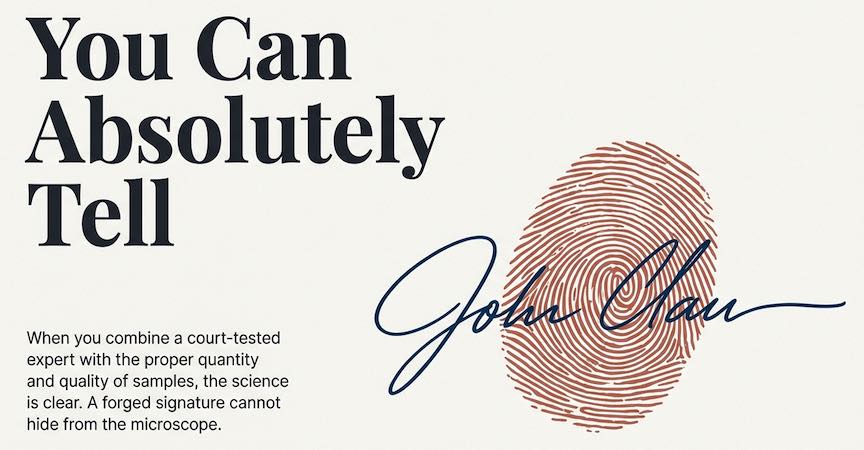
Yes! Absolutely. Handwriting is as personal and unique to you as your fingerprints.
Whether you learned to write cursive beautifully in school, or even if you’re a younger person who didn’t have to spend a lot of time practicing your cursive or print for assignments, experts can still identify you by your handwriting.
It’s worth noting one important distinction before we go further. Not all handwriting experts are necessarily classified as forgery experts. A forgery expert can be very beneficial to hire, especially if your case is specifically regarding a forgery in art or memorabilia. But in our company, we don’t handle memorabilia autographs because they’re so commonly forged.
The cases we predominantly handle are estate, contract, and will matters. In cases involving holographic wills—documents written entirely by hand—the level of difficulty required to forge a full page of natural handwriting is extremely high. Most forgers are bound to leave some kind of clue behind in their handwriting, and our experts train specifically in recognizing those telltale signs.
What a Professional Examination Actually Involves
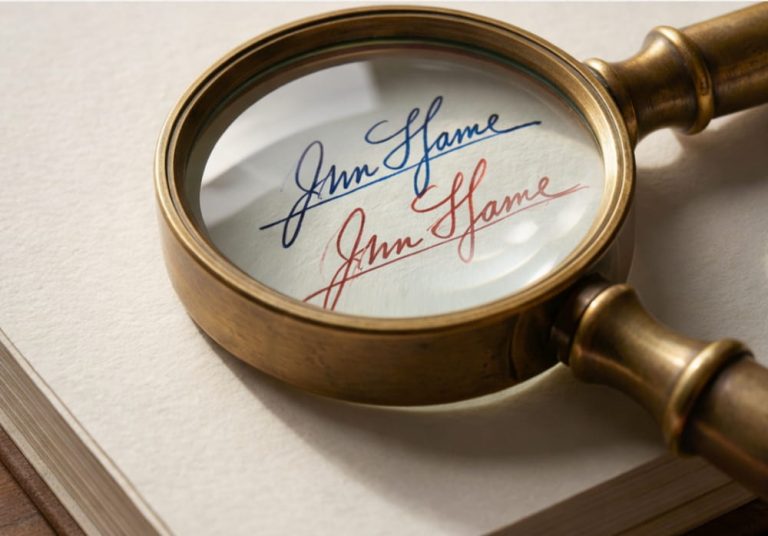
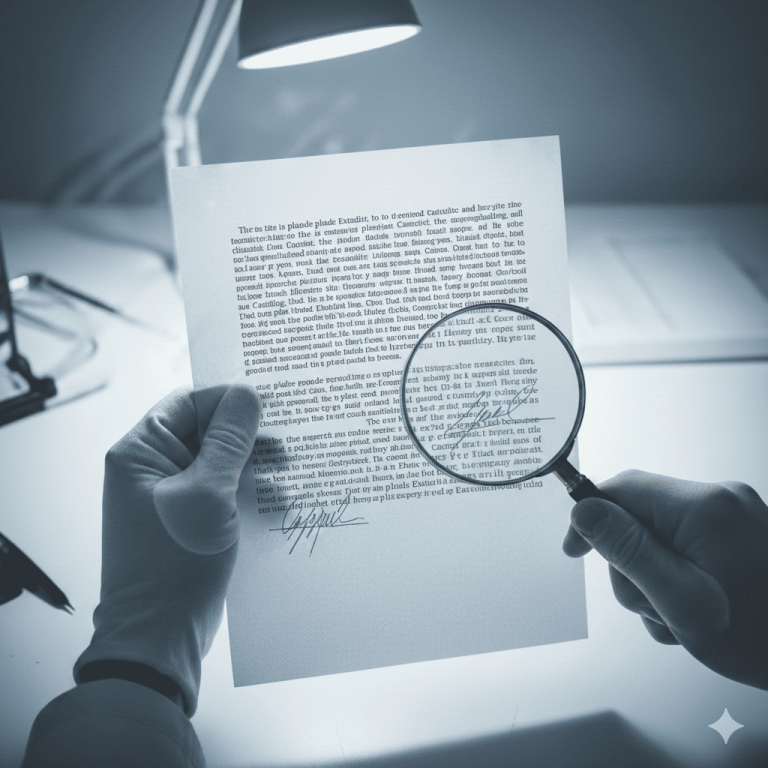
As they learn, they look for signs such as pen lifts and tremors. They look for disjointed, incorrect letters. The amateur just looks for size and maybe a wrong letter, but that’s really only one piece of the puzzle. A professional will do side-by-side examinations, enlarge them by 500%, look under a microscope, and look for pen striations, ink spots, and anything that’s similar or different between the two samples.
And then here’s the key: a real court-qualified expert in forensic hand analysis will know which differences are significant and which are not. And if the significant ones completely outweigh the insignificant ones, that means it’s a forgery. However, if the similarities reflect a consistent internal pattern across multiple features of the writing, that points strongly toward the same writer.
Is This Something AI Could Do?
I have yet to see an AI software program that can do it accurately. I’m not sure that I will see one in my lifetime, though some are getting close. But the understanding that comes with 20 to 30 years of experience looking at handwriting is critical. Plus, AI can’t go to court and testify.
So if you hire a court-qualified expert who is properly trained, has courtroom experience, and receives evidence of sufficient quality and quantity, then yes, you can absolutely determine whether a signature is forged.
Frequently Asked Questions
Q: Can a handwriting expert really tell if a signature is forged?
A: Yes. A court-qualified forensic document examiner analyzes pen lifts, tremors, ink striations, and letter formation at high magnification to determine authenticity with legal-grade accuracy.
Q: What types of cases does a forensic handwriting expert handle?
A: Primarily estates, wills, and contracts—particularly holographic wills where an entire page of natural handwriting must be authenticated or challenged.
Q: How long has handwriting analysis been used in criminal cases?
A: Over 100 years. Notably, handwriting evidence was instrumental in the 1935 Lindbergh baby kidnapping case.
Q: Is handwriting identification as reliable as fingerprints?
A: Handwriting is considered uniquely personal to each individual, similar to fingerprints. A properly trained expert with adequate sample quantity and quality can make reliable identifications.
If you have a questioned signature or document and need expert analysis, reach out to us at handwritingexpertusa.com. We’ll help you determine what the evidence actually shows.
Bart Baggett
The Nation’s Leading Forensic Handwriting Expert Firm
CEO of Handwriting Experts Inc.
Forensic Document Examiner • Expert Witness • Legal Consultant
“We solve million-dollar forgery cases.”
https://handwritingexpertdallas.com/
https://handwritingexpertusa.com/
https://californiahandwritingexperts.com/
https://sanfranciscohandwritingexpert.com/
https://handwritingexpertstlouis.com/
https://floridahandwritingexperts.com/
Telephone: 1-800-980-9030YouTube: @thehandwritingexpertLinkedIn: bartbaggettFacebook: bartbaggetthttps://www.instagram.com/forensichandwritingexperthttps://www.tiktok.com/@handwritingexpertsinc