d-content-margin:var(–thread-content-margin-lg,calc(var(–spacing)*16))] px-(–thread-content-margin)”>
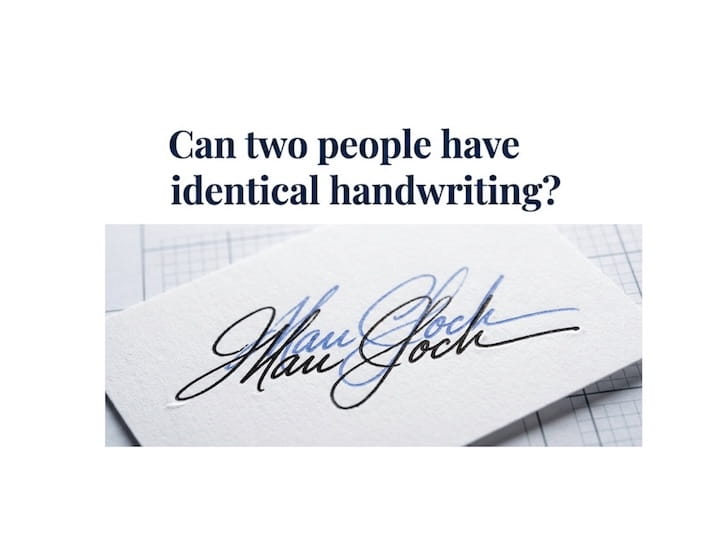
Can two people have identical handwriting? It’s a great question, and it’s the basis of forensic handwriting analysis being considered a science that can distinguish one human being from another. That is why I get to go to court, and our experts testify, and the judge says, “Okay, that’s science. There must be something to it.”
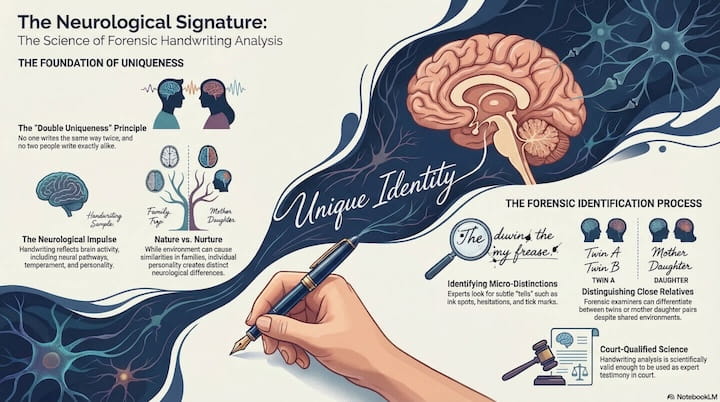
The fundamental issue is that nobody writes exactly the same way twice. You can’t even sign your own name two times without at least one slight variation. In addition, no two people write exactly alike. Neural signals in the brain travel to the hand, creating subtle distinctions in handwriting between individuals.
Based on the research I’ve read, twins sometimes write very similarly to each other, and mothers and daughters can have handwriting similarities as well, though not as much as fathers and sons. I believe that may be more about nurture than nature. If people grow up in the same environment, eat the same foods, share the same language and culture, and develop similar personalities, their handwriting may reflect that.
However, that isn’t always true with twins. Especially twins separated at birth, who can have profoundly different personalities. Parents will say that their twins are distinctly different: “Sam has been introverted since he was born. His sister has needed attention since day one.” Twins do not always share similar personality traits.
I mention personality because handwriting reflects neurological activity, including temperament and personality, as well as physiology, such as neural pathways. The resulting difference in handwriting is what forensic handwriting experts use to distinguish one person from another.
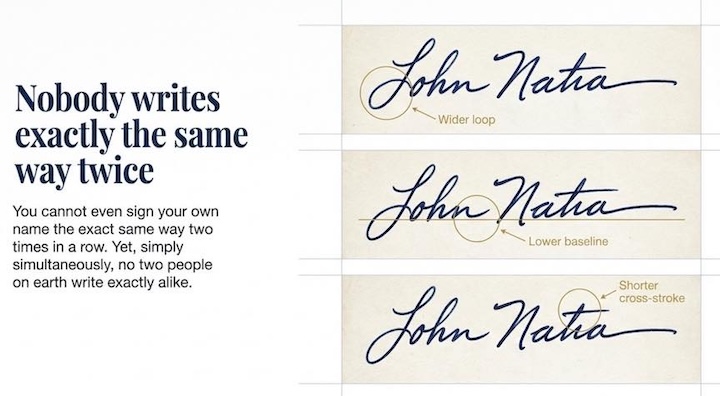
If you are a professional in this field and encounter a mother-daughter combination or twins, it may be more challenging because they can share certain qualities, especially if (in the case of a mother and daughter) they are relatively close in age and grew up in the same city, state, and school system. Even then, there will be subtle neurological differences.
Those differences—such as ink spots, hesitations, and tick marks—appear in the handwriting. That is why a professional forensic document examiner is needed to conduct the analysis.
My name is Bart Baggett. If you need a forensic document examiner, contact our company, Handwriting Experts Incorporated, at HandwritingExpertUSA.com. We have experts around the country who are court-qualified and can help determine whether you need a forensic handwriting expert for your case.
Bart Baggett
The Nation’s Leading Forensic Handwriting Expert
CEO of Handwriting Experts Inc.
Forensic Document Examiner • Expert Witness • Legal Consultant
“We solve million-dollar forgery cases.”
Telephone: 1-800-980-9030
YouTube: @thehandwritingexpert
LinkedIn: bartbaggett
Facebook: bartbaggett
https://www.instagram.com/forensichandwritingexpert
https://www.tiktok.com/@handwritingexpertsinc
https://handwritingexpertdallas.com/
https://handwritingexpertusa.com/
https://californiahandwritingexperts.com/
https://sanfranciscohandwritingexpert.com/
https://handwritingexpertstlouis.com/
https://floridahandwritingexperts.com/
—————————————————————-
FAQ
—————————————————————-
Q1: Can two people have identical handwriting?
A1: No. No two people write exactly alike. Subtle neurological differences in how signals travel from the brain to the hand create unique distinctions in every individual’s handwriting — which is the scientific foundation of forensic handwriting analysis.
Q2: Can a person write the same way twice?
A2: No. Even when signing your own name, at least one slight variation appears each time. This natural inconsistency is a key principle that forensic document examiners rely on to authenticate or challenge handwriting in court.
Q3: Do twins have the same handwriting?
A3: Not necessarily. While twins may share some handwriting similarities due to a shared environment and personality traits, they can also have profoundly different handwriting — particularly twins separated at birth who develop distinct personalities and temperaments.
Q4: What specific details does a forensic handwriting expert examine?
A4: Forensic document examiners look for subtle distinguishing features such as ink spots, hesitations, and tick marks. These details reflect each person’s unique neurological activity, temperament, and physiology, allowing experts to tell one individual’s handwriting from another’s.