What’s The Difference Between a Handwriting Analyst and a Forensic Handwriting Expert?
Most people don’t know the difference between a forensic handwriting expert and a handwriting analyst—and it’s not a small distinction. They are genuinely two separate fields, each with its own training, applications, and purpose. Let’s take a look at a forensic handwriting expert vs. a handwriting analyst.
Handwriting analysis has two uses. One branch of handwriting analysis falls under psychology—sometimes called “graphology,” though I find that term overly simplistic. Like the difference between Chinese medicine and Western medicine, there is far more nuance than the label suggests.
What Forensic Document Examination Actually Is
But the more important term is “forensic document examination.” That’s the exact phrase for the entire field that forensically examines documents, wills, and testaments, and checks to determine their authenticity.
A forensic document examiner specializes in identifying the person who wrote a document—not their character or psychology, but their physical identity. Think of it the way you’d think of a fingerprint expert: someone who can say definitively, “This is the fingerprint of Mr. Smith.” The word “forensic” is the key; it signals that the work is evidentiary, designed to hold up in a courtroom.
On the psychology side, handwriting analysts are most commonly used for employee screening, psychological assessments, and therapy. Many people, myself included, first encountered this field for personal development, improving self-esteem, understanding relationships, or taking what amounts to a personality test. Think of it as the handwriting equivalent of a Myers-Briggs assessment.
So, if you meet someone who says, “Oh, I analyze handwriting,” you might ask, “Can you look at my handwriting and tell me if I’m crazy?” And some people can do that if they have studied the psychological side.
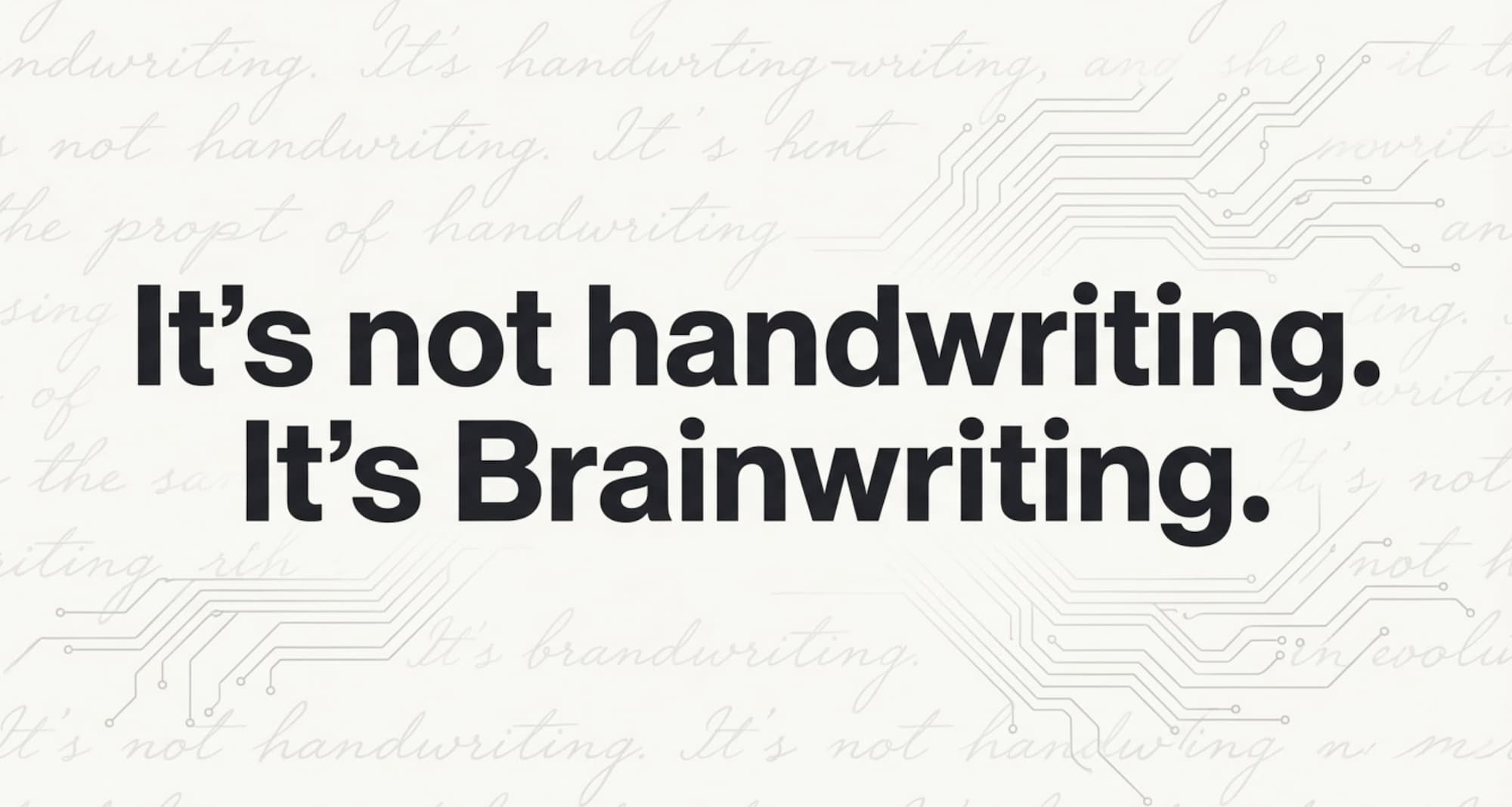
What’s unusual about this industry is that forensic practitioners and psychology practitioners rarely cross over. They read different books, attend different conferences, and operate in almost entirely separate worlds. I think that’s a shame, because they’re both very useful. And both fields trace back to the neuro-pathways of the hand. Handwriting isn’t really handwriting at all—it’s brainwriting.
The Science Behind Handwriting
As people get older, their handwriting begins to disintegrate. It gets shaky, right? If people get Parkinson’s or Alzheimer’s, their hands get shaky because those diseases relate to the degeneration of the brain. If handwriting is a proven precursor to Parkinson’s, it makes sense that there might be indicators of personality, expressiveness, introversion, or extroversion. Something must be up that would give some clue to the person’s general character.
And that’s what that entire discipline is about. I guess it started 400 years ago in Spain. Camillo Baldi wrote the first book on the topic in 1625. Today, many of those early texts aren’t particularly useful. Many Gestalt principles aren’t very useful to the average person. But if you’re a psychologist, every tool in your tool belt can help you understand your client.
Which Type of Expert Do You Need?
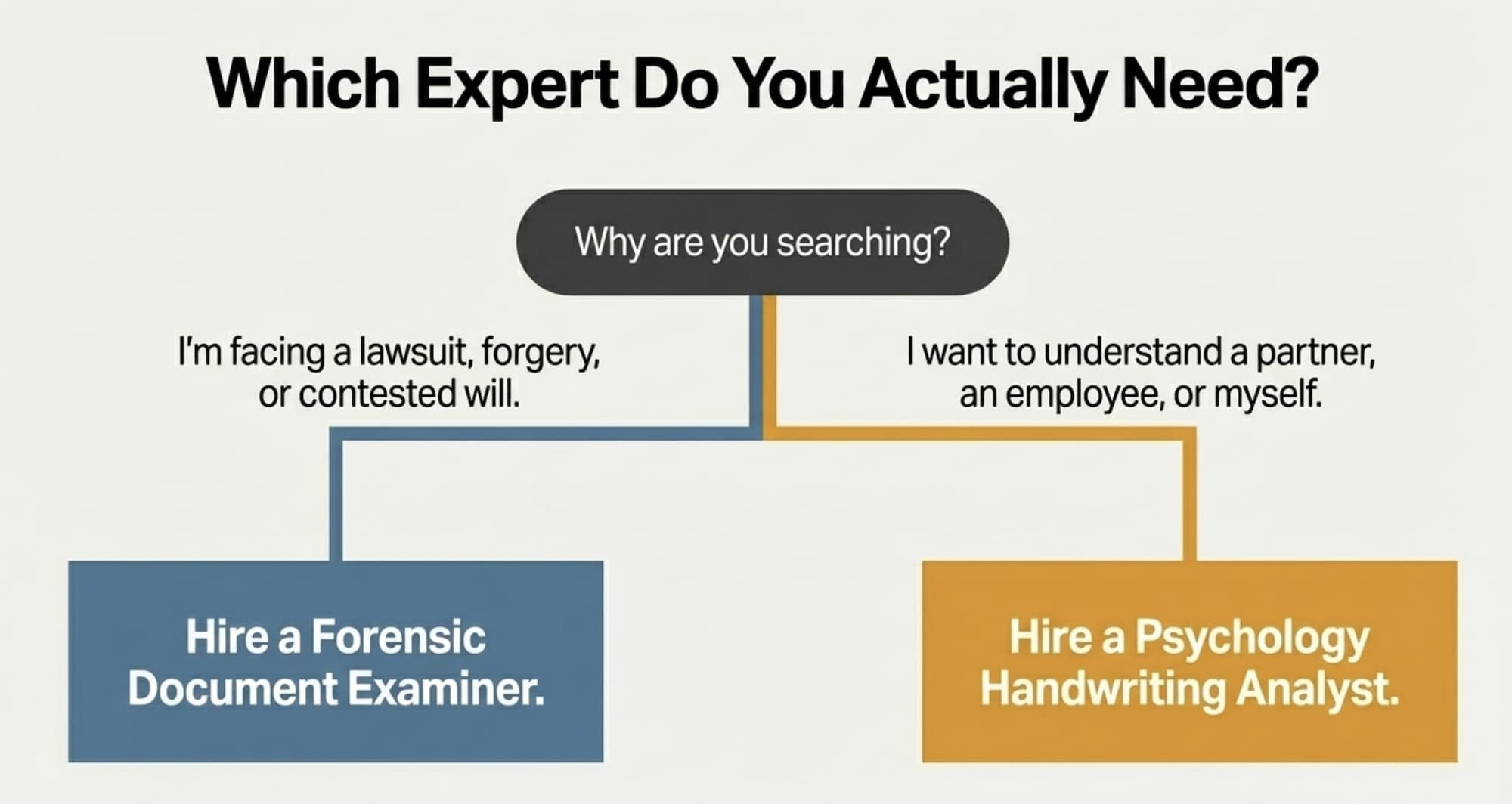
If you have somebody who has passed away or somebody suing you, and there’s a document in play that you didn’t sign or that someone’s accusing you of not signing, that’s identity theft. That means you need a forensic document examiner. You need to hire somebody who’s court-qualified to help you solve that problem and then go to court and show evidence.
If you don’t have a legal dispute and identity isn’t the issue—if you’re simply curious about someone you’re dating, considering hiring, or trying to understand better—then what you’re looking for is a handwriting analyst certified in psychology. These practitioners can identify personality strengths, weaknesses, insecurities, and emotional patterns from a handwriting sample.
And then those who went to the International School of Forensic Document Examination are making 100 grand a year or more, helping attorneys solve million-dollar problems for you. So that’s the big difference. And I happen to be an expert at both, which is unusual. Most people are one or the other. And it’s been a really fun ride having that expertise.
I know that when I’m out in public, and people find out what I do, they say, “That’s fascinating. You analyze handwriting.” And they immediately go to like, “Oh, look at my handwriting. You know, am I crazy?” I might say something like, “Oh, you’re not crazy. You’re sensitive.”
My name is Bart Baggett. If you’re dealing with a legal dispute involving a questioned document, reach out to us at handwritingexpertusa.com. We’ll connect you with a court-qualified forensic document examiner. If you’re interested in the psychology of handwriting for personal or professional development, visit handwritinguniversity.com to find certified analysts and training resources.
Bart Baggett
The Nation’s Leading Forensic Handwriting Expert
CEO of Handwriting Experts Inc.
Forensic Document Examiner • Expert Witness • Legal Consultant
“We solve million-dollar forgery cases.”
Telephone: 1-800-980-9030
YouTube: @thehandwritingexpert
LinkedIn: bartbaggett
Facebook: bartbaggett
https://www.instagram.com/forensichandwritingexpert
https://www.tiktok.com/@handwritingexpertsinc