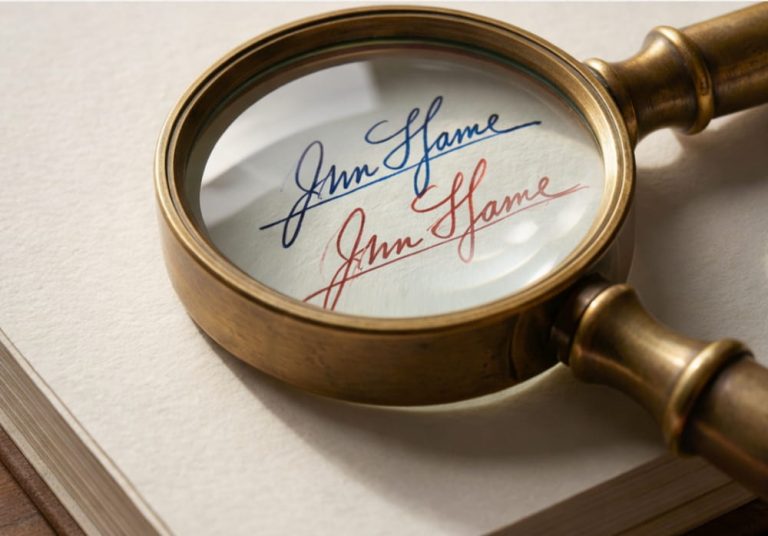
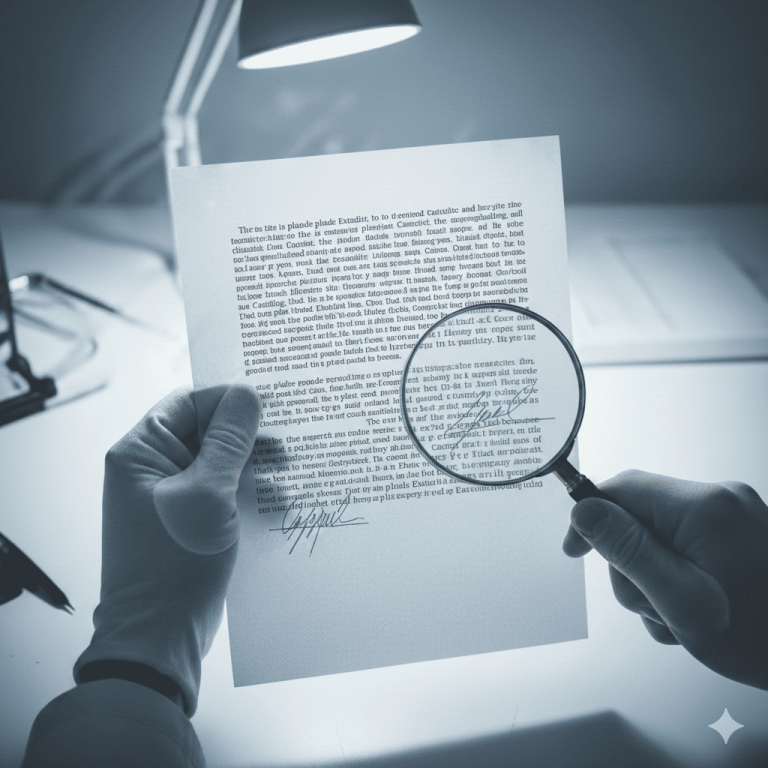
Is It Possible to Trace Someone’s Signature and Make an Expert Think It’s Real?
The real question is, “What’s the difference between tracing a signature, a natural signature, a simulated signature, or a disguised signature?”
And I’ll answer that right now. A professional forensic handwriting examiner can tell a traced signature from a natural signature. It’s actually pretty simple: tracing is the process of taking a piece of paper, placing it under a light source, and slowly tracing it like an art project. As the pen moves very slowly, it moves differently on the fibers in the paper than it does when it moves fast.
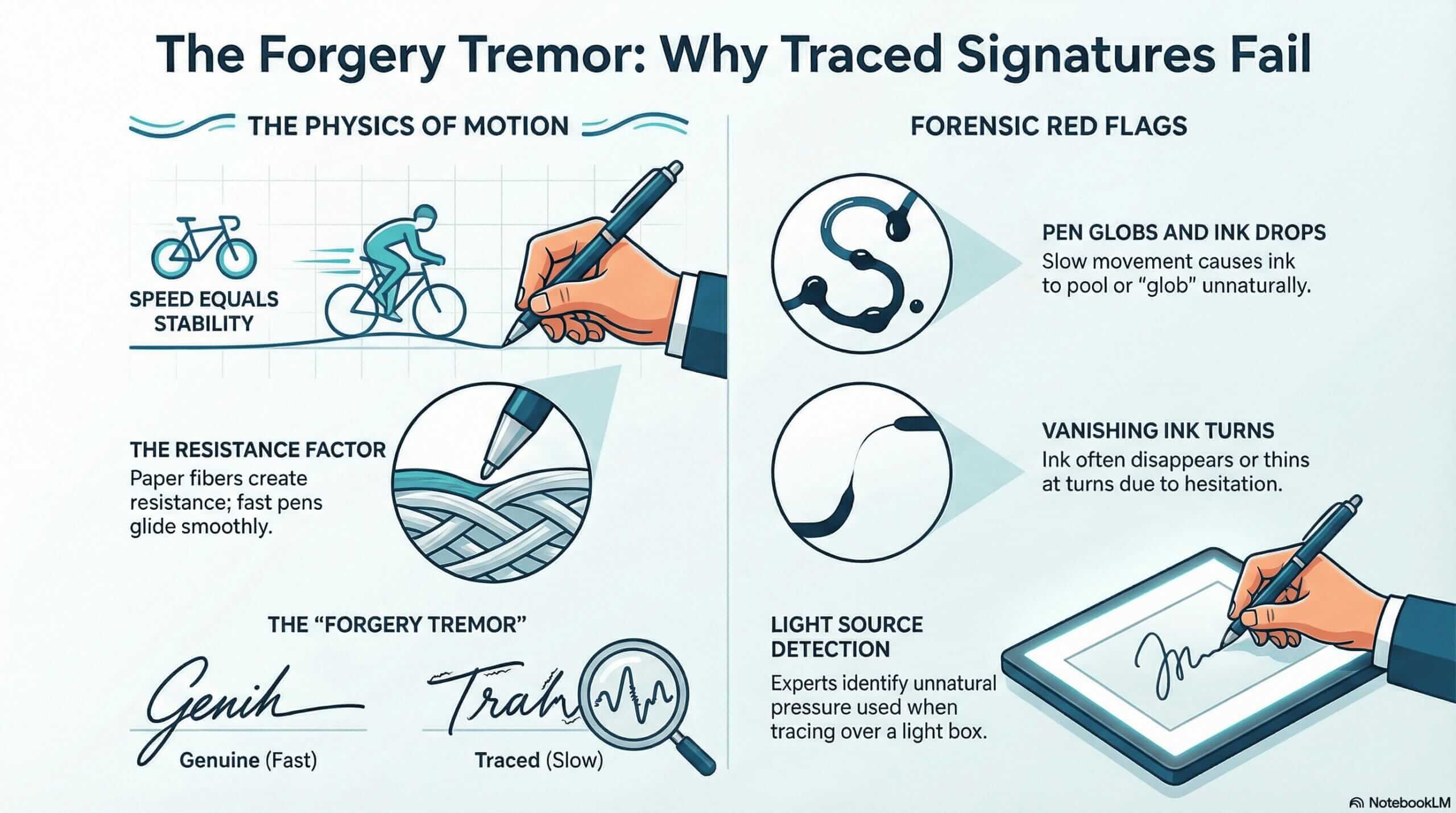
Think about this. When you were a kid, you would ride a bicycle, right? And if you went across water, you had to keep going pretty fast, and if you went across mud, you had to keep going fast because otherwise you’d fall down. Same thing with grass, especially really heavy grass. You’ve got to keep going fast. Well, grass and paper are the same. They create resistance.

Just like a bicycle wobbles when you move too slowly, a pen wobbles when you trace things or when you slowly disguise things.
What Experts Actually Look For
An expert is looking for the tell-tale signs of slow pen movement—ink accumulation at turns, irregular pen lifts, and what are known as forgery tremors or quivers. At the points where the pen changes direction, ink tends to accumulate—a clear sign of hesitation. And then there are what they call quivers or hesitations. Basically, there’s a quiver, or what is called a forgery tremor, which is kind of like that bicycle wheel moving sideways. The slower you go, the more it’s obviously disguised or simulated handwriting. Someone is literally tracing over a light box. So, sure, if you have a professional, they can tell the difference. If you’re thinking about doing it because you’re going to forge somebody’s writing, trust me, you will get caught. If a document in your case involves a questioned signature, a qualified forensic document examiner will spot the signs of tracing quickly and reliably. That’s why they pay me the big bucks.
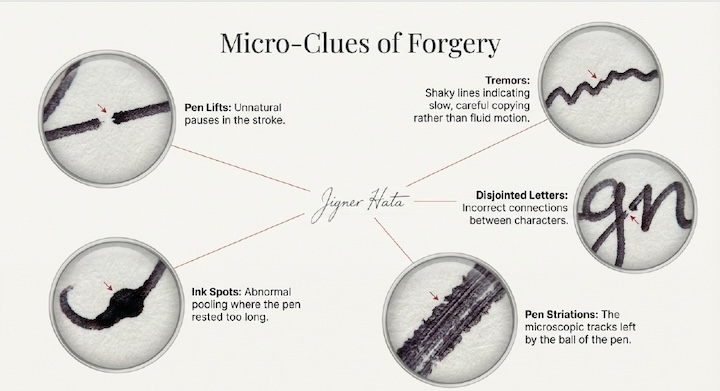
If you suspect a signature in your case was traced or otherwise forged, reach out to us at handwritingexpertusa.com. We’ll help you determine what the evidence actually shows.
Bart Baggett
The Nation’s Leading Forensic Handwriting Expert Firm
CEO of Handwriting Experts Inc.
Forensic Document Examiner • Expert Witness • Legal Consultant
“We solve million-dollar forgery cases.”
https://handwritingexpertdallas.com/
https://handwritingexpertusa.com/
https://californiahandwritingexperts.com/
https://sanfranciscohandwritingexpert.com/
https://handwritingexpertstlouis.com/
https://floridahandwritingexperts.com/
Telephone: 1-800-980-9030YouTube: @thehandwritingexpertLinkedIn: bartbaggettFacebook: bartbaggetthttps://www.instagram.com/forensichandwritingexperthttps://www.tiktok.com/@handwritingexpertsinc
Frequently Asked Questions
Q1: Can a traced signature fool a forensic handwriting expert?
A: No. A professional forensic handwriting examiner can reliably detect a traced signature. Because tracing requires slow,
deliberate pen movement, it produces quivers, hesitations, ink globs, and unnatural stroke patterns that are clearly
distinguishable from signatures written at natural speed.
—
Q2: How do forensic document examiners detect a traced signature?
A: Examiners look for physical signs of slow pen movement, including forgery tremors (also called quivers), hesitations where the pen pauses, ink accumulation at turns, and irregular pen lifts. These markers indicate the pen was moved too slowly to be a naturally written signature.
—
Q3: What is the difference between a traced, simulated, and natural
signature?
A: A natural signature is written freely at normal speed. A simulated signature is produced by someone who studies an original and attempts to copy it freehand. A traced signature is made by placing paper over the original under a light source and slowly copying it stroke by stroke.
—
Q4: Why does slow pen movement reveal forgery to an expert?
A: Just as a bicycle wobbles when moving too slowly, a pen wobbles when moved slowly across paper fibers. This resistance produces quivers and hesitations in the ink line. These are subtle but consistent signs that forensic document examiners are specifically trained to identify.