Can a Signature Change Over Time and Still Be Analyzed Accurately?
This is a common question. What if someone’s signature changes over time? What if it looks different than it did years ago? Can a forensic handwriting expert still tell whether a signature is authentic or a forgery? The short answer is yes. That’s exactly what we do.
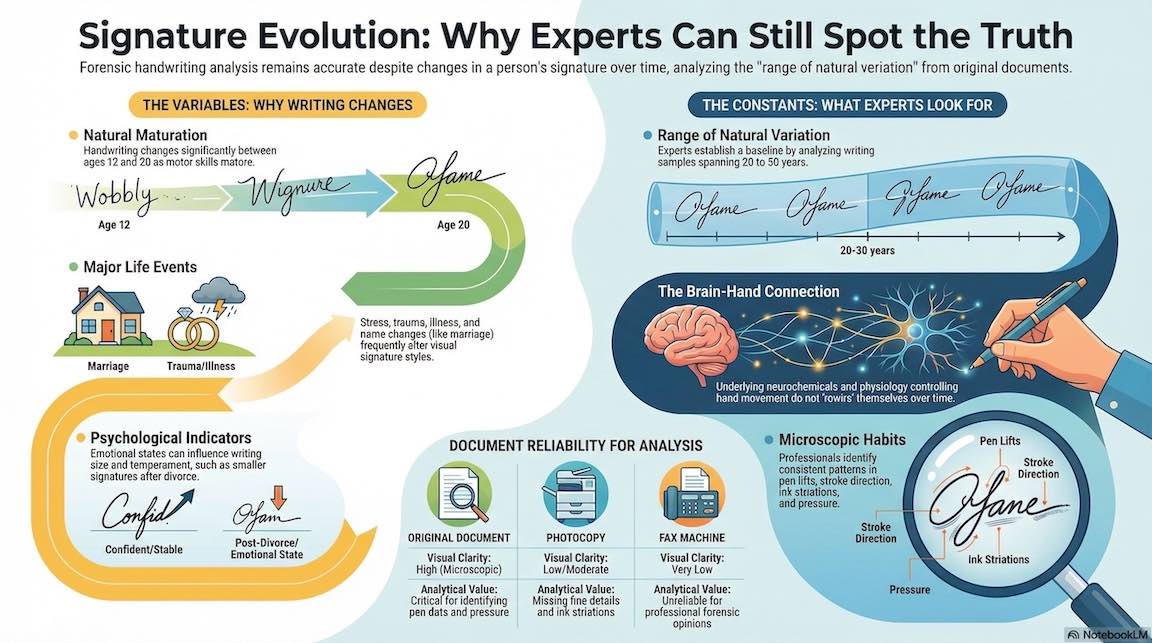
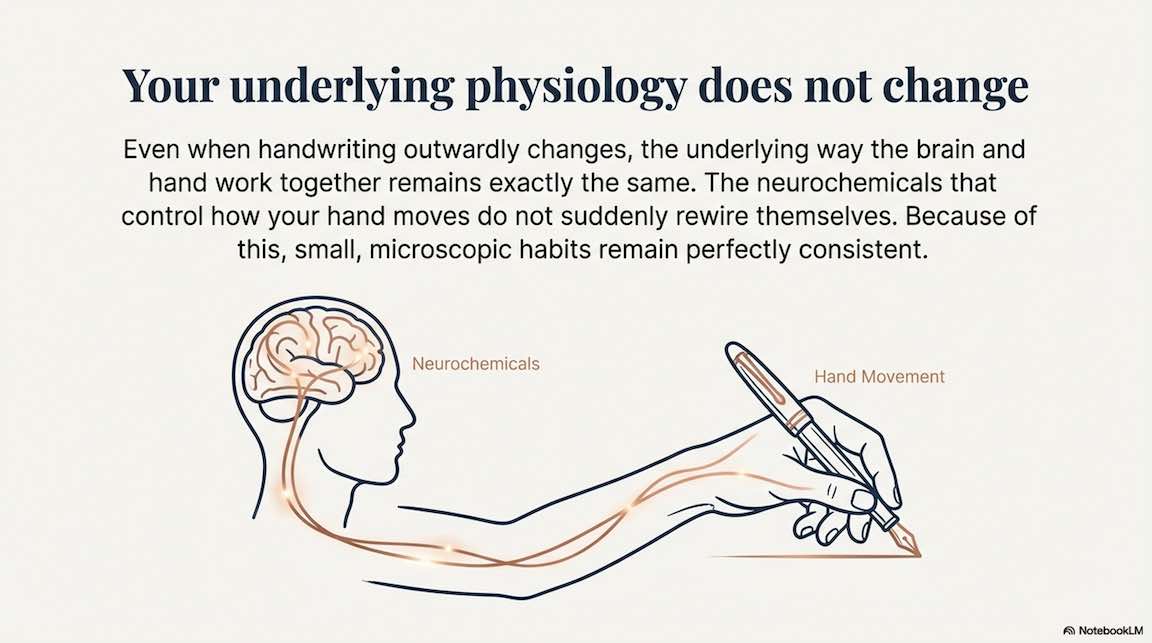
People’s handwriting does change a little over time. What does not change is the underlying way the brain and hand work together. Those small, consistent habits are what forensic document examiners rely on, even when a signature evolves.
Professional forensic document examiners don’t expect handwriting to stay frozen in time. We establish what’s called a range of natural variation. Sometimes that range spans decades. It’s not unusual to look at writing samples that go back 20 or 30 years.
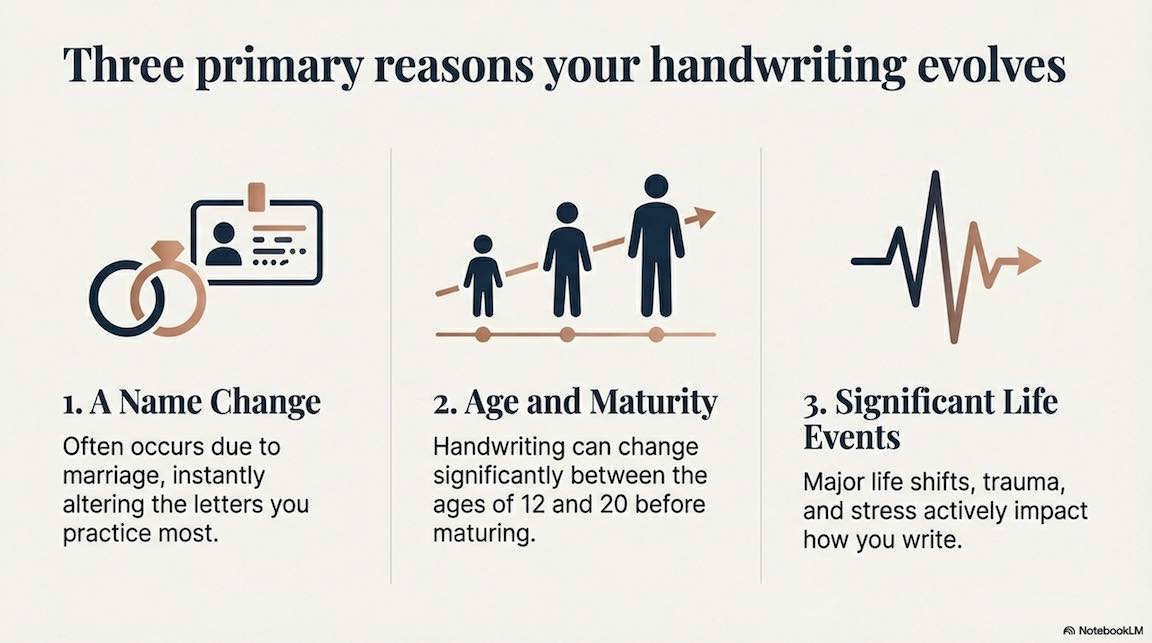
Names change. Life happens. If you’re a woman and you get married, your last name often changes. If you’re 20 years old and then you’re 45, your handwriting may mature. Between about age 12 and 20, handwriting can change a lot. That’s normal.
So yes, people’s handwriting changes. But usually, the reasons are pretty specific.
- A name change
- Age and maturity
- A significant life event or trauma
Major life events can affect handwriting. Divorce. Illness. Trauma. Stress. Handwriting can reflect mood, temperament, and emotional state. Sometimes people even write their last name smaller after a divorce. That’s a little inside baseball, but it happens.
Here’s the important part. Even when handwriting changes, certain things stay the same.
Your physiology doesn’t change. The neuro-chemicals that control how your hand moves don’t suddenly rewire themselves. Because of that, small habits tend to remain consistent.
Those habits include things like:
- Pen lifts
- Hesitations
- Stroke direction
- Line quality
- Ink striations
- Small pen dots and pressure patterns
That’s the good stuff. That’s what we look for.
And that’s also why originals matter. With an original document and a microscope, you can see things you will never see on a low-resolution photocopy. Or, for God’s sake, a fax. I don’t know anyone who still uses faxes, but apparently some people do.
If you give us enough known writing, even if it spans many years, we can account for natural variation and still come back with a solid, professional opinion.
If that opinion matters in a legal setting, that’s when you want a qualified forensic handwriting expert to testify. Judges tend to like good scientific people who show up as independent expert witnesses and explain things clearly.
My name is Bart Baggett. If you need some help, you can stop by our website at handwritingexperts.com, hire any of our handwriting experts, and you’ll be happy with the results.
Bart Baggett
The Nation’s Leading Forensic Handwriting Expert
CEO of Handwriting Experts Inc.
Forensic Document Examiner • Expert Witness • Legal Consultant
“We solve million dollar forgery cases.”
http://handwritingexpertusa.com
Telephone: 1-800-980-9030
—————————————————————-
FAQ
—————————————————————-
Q1: Can a forensic handwriting expert analyze a signature that has changed over time?
A1: Yes. Forensic document examiners establish a range of natural variation using known writing samples that may span decades. This allows them to account for changes in a signature while still delivering a professional, court-ready opinion.
—
Q2: What causes handwriting to change over time?
A2: Common causes include a legal name change, age and maturity (especially between ages 12 and 20), and significant life events such as illness, divorce, trauma, or prolonged stress.
—
Q3: What elements of handwriting remain consistent even as a signature evolves?
A3: The underlying neurological habits that control hand movement stay consistent, including pen lifts, hesitations, stroke direction, line quality, ink striations, and pressure patterns. These are the key identifiers forensic document examiners rely on.
—
Q4: Why do original documents matter in a forensic handwriting examination?
A4: Original documents allow the examiner to use a microscope to detect fine details — such as ink striations and minute pressure patterns — that are impossible to see on photocopies or faxes.