My Landlord Forged the Lease. What Are My Options?
If you’re a tenant facing eviction based on a lease you never signed, you’re dealing with one of the most frustrating situations in civil law, and unfortunately, one where the options are more limited than most people expect.
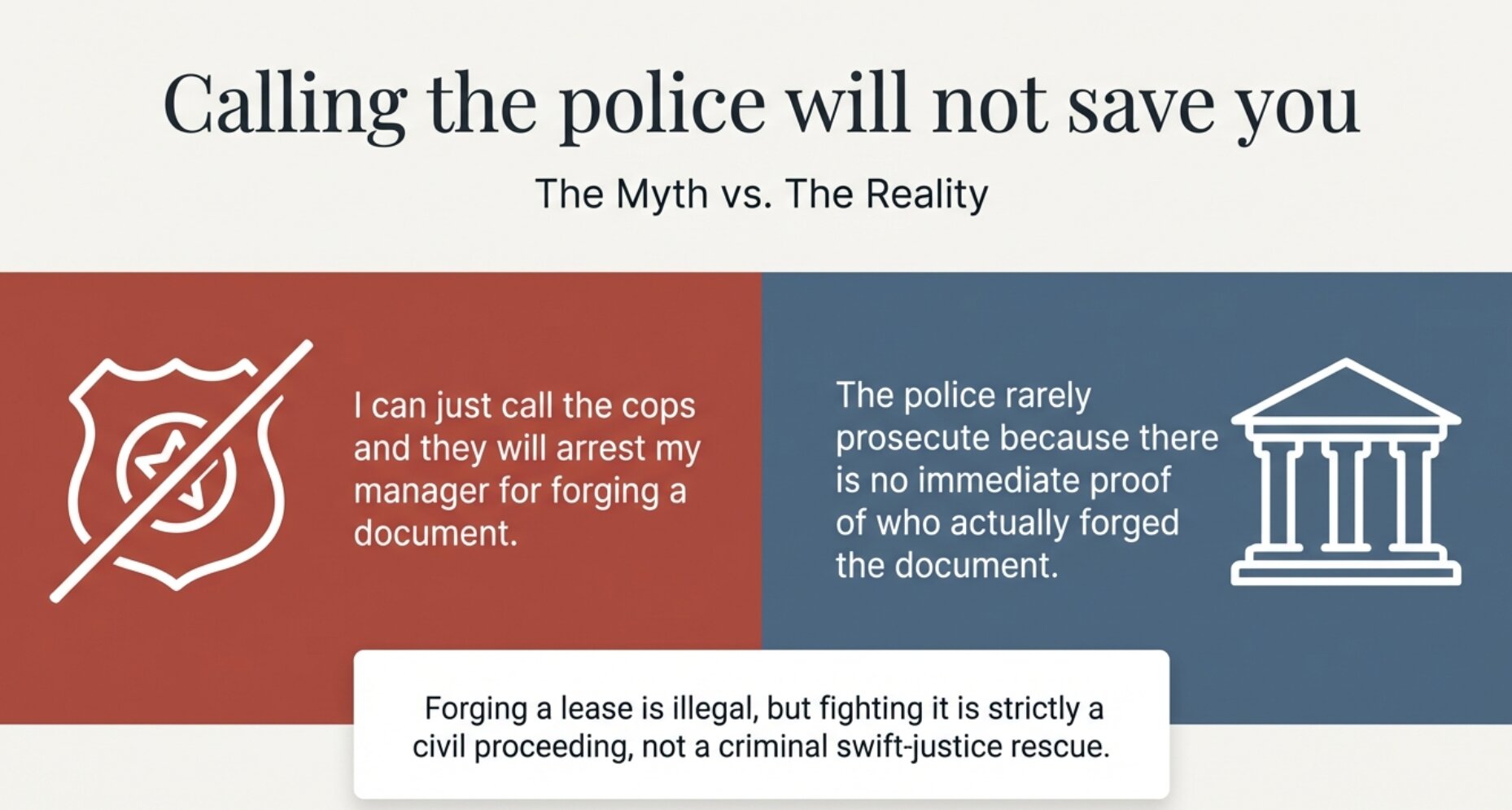
Eviction cases are heard in a special civil court, commonly called an Eviction Court, and tend to be fast-moving and highly procedural. If you don’t know the process, you can lose before you even get to tell your story. For example, I have seen what’s happening in Van Nuys: they basically have lawyers who represent only tenants and only landlords. It’s a fight, and it’s a very procedural process. If you think that just because you’ve been wronged, you’re going to call the cops and they’ll arrest your manager or your landlord for forging a document, it’s probably not true.
When Fighting Back Isn’t Worth the Cost
Here’s the advice I gave to a guy who recently called our office. He said, “My landlord raised the rent by $100. I never signed a new lease.” I responded, “Look, you could spend $7,000 to $10,000 on a good attorney, and another $5,000 to $8,000 on a forensic handwriting expert. And you’re probably not going to get the police to prosecute anyone, because no one can easily prove who forged the lease. If money is your primary concern, your best bet may be to negotiate or move out.”
Now, that wasn’t the advice he wanted because he wanted justice. And I get it. You want justice. If someone forges something, in your mind, you’re thinking, “Oh, we can put this guy in jail. He created a false document.”
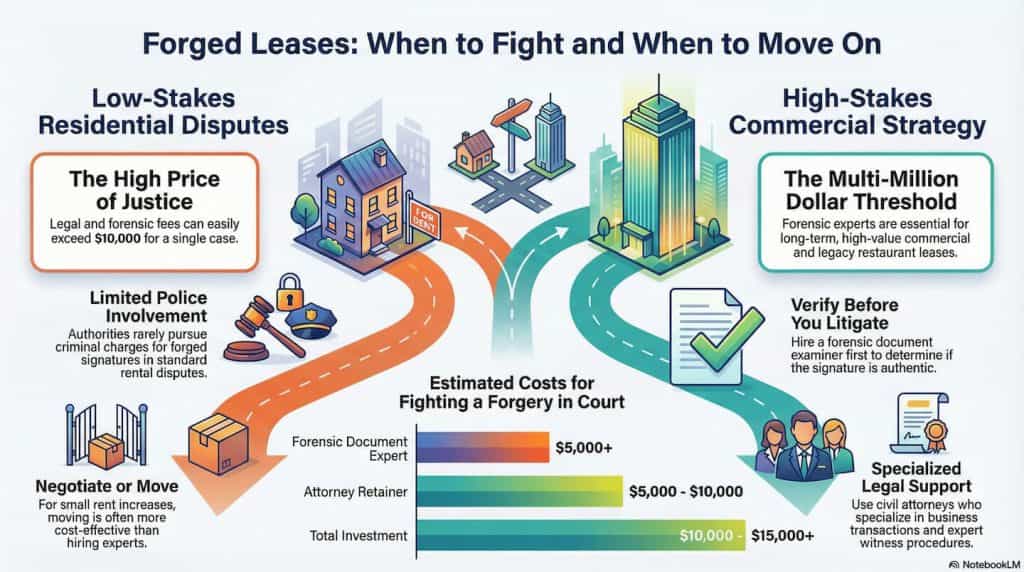
The only reason that really matters is if the police are going to look into it, or you end up in court, and the judge has to make a decision of what’s real. Is it wrong to forge a lease? Of course it is. It’s just crazy. But if you are a tenant, you don’t have many rights in that regard.
When the Stakes Are High Enough to Fight
I will say there’s a lot of commercial real estate. That’s a totally different ballgame. I’ve seen a number of cases recently with really big, famous restaurants you would know in Los Angeles, where the leases are now in controversy because the original owner has passed away. These legacy restaurants are 40 to 50 years old. I can’t use names, but you would know who they are. They serve the most beautiful steak ever.
As you know, when the owner dies, people are like, “Hey, I want to renegotiate this.” They might say, “No, no, no. Your dad and I had a deal.” Well, whatever is in writing is what the judge will enforce. When someone passes away, the other parties to the lease have to renegotiate the lease or fight over whether their signature was coerced. If you happen to be one of those people with a big lease problem, multi-thousands of dollars a month, $10,000 to $30,000 a month, real estate or a restaurant, then you have clear steps to take.
What to Do Next
You need to make sure the signature that you think is forged is actually forged, which it might not be. You need a forensic document examiner to take the case, determine if the document in question is forged, and then go to your attorney and say, “Look, we think we have a false document, and then we can fight this in court.” However, if you hire a trustworthy handwriting expert with strong integrity, and they come back and say, “I don’t think this was forged,” then you can still fight it on other grounds.
It’s also worth knowing that verbal agreements are legally enforceable in most states, which may give you additional grounds to contest the written lease even if the forgery is difficult to prove. But the key is deciding whether it’s worth fighting. Because if you’re a tenant, you’re not a landlord, and you can move out for only 100 bucks, you won’t want to fight it. It’s too expensive. However, if it’s a multi-million-dollar 20-year contract, you have to fight it, and you need good attorneys who understand civil procedure, expert witness procedure, forensic procedure, and document handling. So, many civil attorneys specialize in documents and business transactions. They’re the ones who would hire what they call an expert witness or a forensic document examiner to solve the puzzle of whether this is a poached lease.
My name is Bart Baggett. If you suspect a lease or other document in your case has been forged, we can help you determine whether you have a case worth fighting. Reach out to us at handwritingexpertusa.com — we have offices across the country and will connect you with the right expert for your situation.
Bart Baggett
The Nation’s Leading Forensic Handwriting Expert
CEO of Handwriting Experts Inc.
Forensic Document Examiner • Expert Witness • Legal Consultant
“We solve million-dollar forgery cases.”
Telephone: 1-800-980-9030
YouTube: @thehandwritingexpert
LinkedIn: bartbaggett
Facebook: bartbaggett
https://www.instagram.com/forensichandwritingexpert
https://www.tiktok.com/@handwritingexpertsinc
—————————————————————-
FAQ SECTION
—————————————————————-
Q1: Can a landlord be arrested for forging a lease signature?
A1: It is possible but unlikely. Lease forgery disputes are typically handled as civil matters in eviction court, not criminal proceedings. Law enforcement rarely prosecutes these cases unless clear evidence and prosecutorial will exist.
Q2: How much does it cost to prove a lease was forged?
A2: Hiring a qualified attorney typically costs $7,000–$10,000, and a forensic handwriting expert may add another $5,000–$8,000. For small disputes, such as a $100 rent increase, negotiating or relocating is often the more practical choice.
Q3: When should I hire a forensic document examiner for a lease dispute?
A3: When significant financial stakes are involved—such as commercial leases running $10,000–$30,000 per month or long-term multi-year contracts—the investment in a qualified forensic document examiner is well justified.
Q4: What can a forensic document examiner determine about a disputed lease signature?
A4: A forensic document examiner evaluates the disputed signature to determine whether it is genuine or forged, then provides a professional opinion that attorneys can present as expert testimony in civil court proceedings.