On September 8, 2004, CBS News aired a story that would soon become a cautionary tale for journalists and attorneys alike. The broadcast centered on four memos, purportedly from the files of Lt. Col. Jerry Killian, which claimed that President George W. Bush had failed to meet his obligations during his time in the Texas Air National Guard. The allegations were explosive—especially in the heat of a presidential election year.
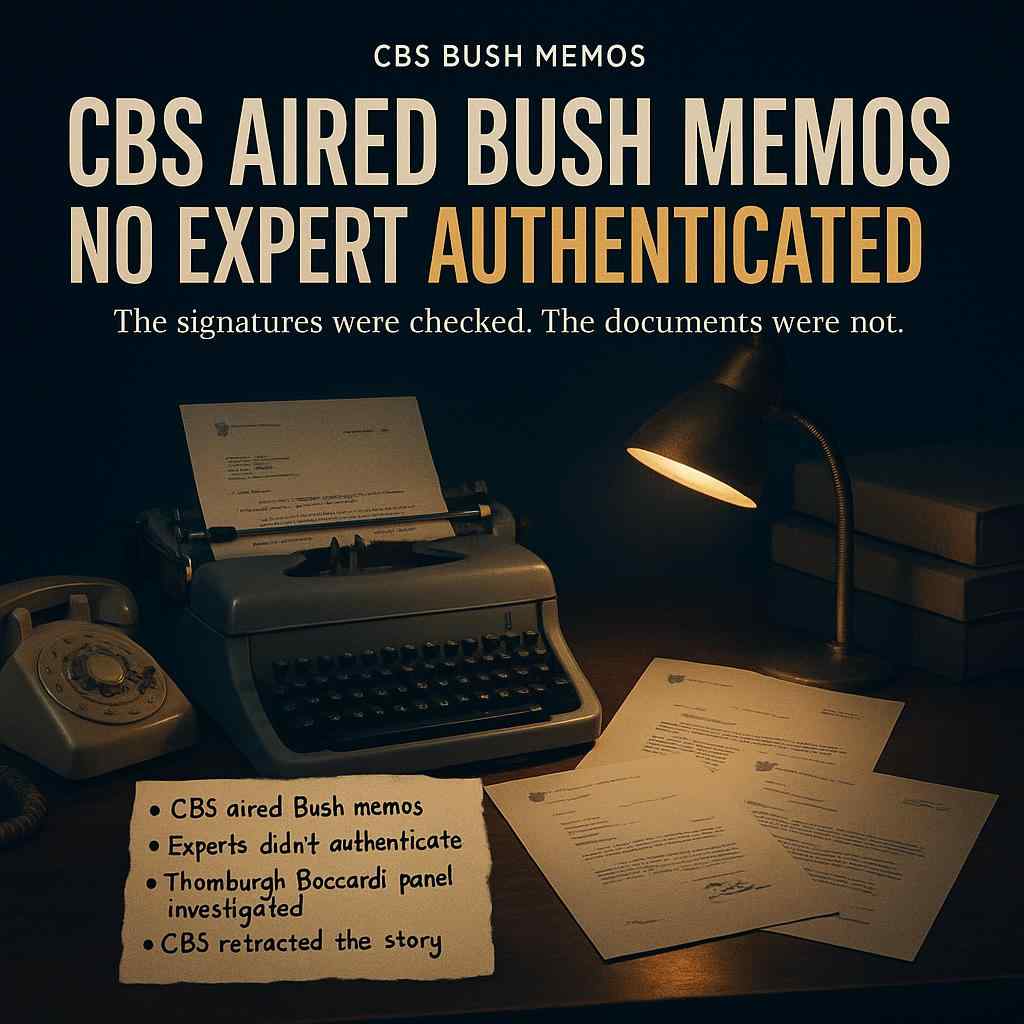
CBS News aired four memos about President George W. Bush’s National Guard service in 2004, but no forensic document examiner authenticated the memos themselves. Expert concerns about the documents’ authenticity led CBS to retract the story and launch an independent investigation.
But there was a critical problem: no forensic document examiner had authenticated the memos themselves. While a document examiner named Marcel Matley reviewed and authenticated the signatures, he did not vouch for the documents as a whole. That left a gaping hole in CBS’s reporting—one that would quickly become the focus of national scrutiny.
Why Did the Memos Matter?
The four documents, styled as 1970s military correspondence, suggested that Bush had received preferential treatment and failed to meet National Guard requirements. If authentic, the memos would have been significant evidence in a contentious election. But if they were not, they risked misleading the public and damaging reputations without cause.
Within days, experts and amateur sleuths alike began to question the memos. The typography, spacing, and formatting didn’t match what a 1970s typewriter could produce. Some pointed out that the documents appeared to use proportional fonts and superscripts more common to modern word processors than vintage office equipment. The questions mounted quickly.
How Did CBS Respond?
Initially, CBS stood by its reporting. The network cited the review of the signatures as evidence of authenticity, but critics noted that signature analysis alone cannot confirm a document’s origin. As the pressure grew, CBS launched an independent investigation led by the Thornburgh-Boccardi panel.
The panel’s findings were sobering. They found “substantial questions” about the memos’ authenticity and criticized CBS for failing to secure proper authentication before airing the story. The fallout was swift: four CBS staffers lost their jobs, and the career of veteran anchor Dan Rather was never the same.
What Does a Forensic Document Examiner Actually Do?
In cases like this, a forensic document examiner’s job is much broader than checking a signature. Authenticating a document involves examining the paper, ink, and printing method. For a memo allegedly produced in the 1970s, an examiner would compare the typeface, spacing, and even the chemical makeup of the ink to known samples from that era.
Natural variation in handwriting is expected, but when it comes to typewritten or printed documents, consistency with period technology is key. An examiner might use magnification, ultraviolet light, or chemical analysis to compare a questioned document to verified originals. In this case, the absence of such a review left critical questions unanswered.
Lessons for Attorneys and Journalists
The CBS Bush memos case is a reminder that signature analysis alone is rarely enough. If a document’s origin is in doubt, a full forensic review is essential. That means examining every detail—the paper, the ink, the typeface, and the context.
For attorneys, the lesson is clear: never rely on a document in court without a thorough forensic review. For journalists, the standard is just as high. The cost of skipping authentication can be measured in lost credibility, damaged careers, and public confusion.
What Should You Do If You Face a Questioned Document?
If you’re dealing with a will, contract, or any document whose authenticity is in question, act early. Keep the original safe—don’t write on it, staple it, or expose it to unnecessary handling. Seek a qualified forensic document examiner before legal or public decisions are made. Getting an expert review at the outset can prevent costly mistakes down the road.
Frequently Asked Questions
What happened in the CBS Bush memos case?
In 2004, CBS News aired four memos about President George W. Bush’s National Guard service without getting the documents authenticated by a forensic document examiner. The memos claimed Bush failed to meet his Guard obligations, but their authenticity was quickly questioned.
When did the CBS Bush memos controversy take place?
The controversy began on September 8, 2004, when CBS aired the memos. The investigation and fallout continued in the following weeks.
What was the outcome of the CBS Bush memos case?
CBS retracted the story, stating it could not prove the memos’ authenticity. The Thornburgh-Boccardi panel investigated, four staffers lost their jobs, and Dan Rather’s career was significantly affected.
Was the handwriting or document ever questioned, and what role did document examination play in the CBS Bush memos case?
Yes, the documents were questioned. A signature expert reviewed the signatures but did not authenticate the memos themselves. Experts raised concerns about the documents’ typography, which led to the story’s retraction.
How would a forensic document examiner review documents like the CBS Bush memos?
A forensic document examiner would analyze the paper, ink, typeface, and printing method to determine if they are consistent with the claimed time period. They would not rely on signature analysis alone.
What should attorneys or journalists do before relying on a document?
Attorneys and journalists should seek a full forensic review of any document whose origin is in doubt, examining all aspects such as paper, ink, and typeface before relying on it.
What steps should someone take if they have a questioned will or document?
Preserve the original, avoid unnecessary handling, and contact a qualified forensic document examiner early in the process for a thorough review.
If you’re dealing with a questioned will, signature, or document, Handwriting Experts Inc. can help. Visit HandwritingExpertUSA.com or call 1-800-980-9030.