When Jack Kerouac died in 1969, his literary estate was worth just $91. But as his books grew into cultural touchstones, that number soared into the millions. Decades later, the fate of his fortune would hinge on a single, contested signature—one that a court would ultimately rule a forgery.
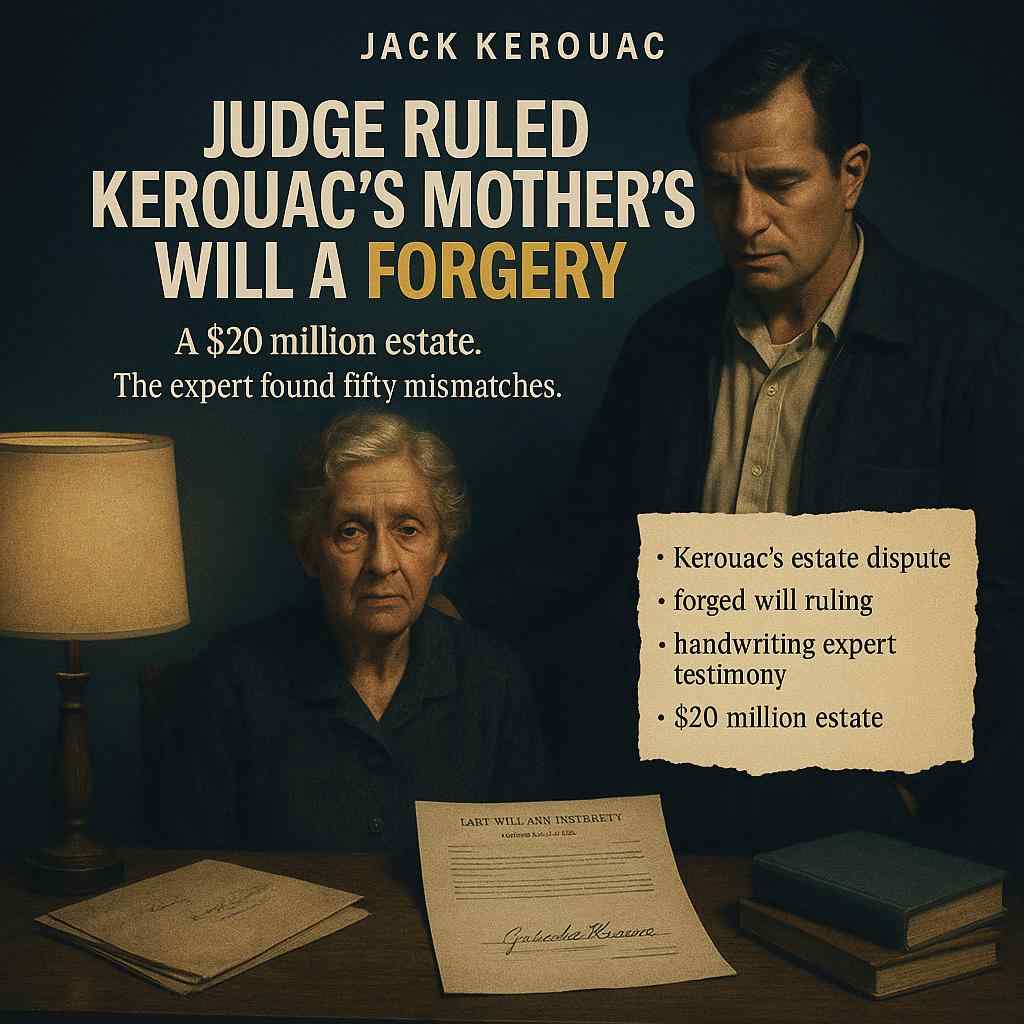
In 2009, a Florida judge ruled that the will of Jack Kerouac’s mother, Gabrielle, was a forgery after a handwriting expert testified there were fifty differences between her real signature and the one on the document. The ruling left the $20 million estate’s fate uncertain as the family appealed.
How a Signature Sparked a $20 Million Battle
Jack Kerouac’s legacy was more than literary. After his death, his estate ballooned in value, attracting both admiration and legal scrutiny. The core of the dispute was a will dated February 13, 1973, purportedly signed by his mother, Gabrielle Kerouac. This document left Jack’s entire estate to his third wife, Stella Sampas Kerouac.
But questions quickly surfaced. Jack’s only child, Jan Kerouac, challenged the will in 1994, arguing that it wasn’t truly Gabrielle’s signature. After Jan’s death in 1996, her cousin Paul Blake Jr. carried on the legal fight. At stake: a fortune estimated at $20 million.
What the Court Found—and What It Didn’t
The legal proceedings reached a turning point in July 2009 in Pinellas County, Florida. Judge George W. Greer presided over the case. The heart of the matter was whether Gabrielle Kerouac had actually signed the will that determined who would inherit Jack’s literary estate.
Handwriting expert Ron Rice took the stand. After examining the signature on the disputed will, he testified that there were at least fifty dissimilarities compared to Gabrielle’s known signatures. The expert’s analysis was clear: the signature didn’t match. Judge Greer ultimately ruled the will a forgery. Notably, the court did not determine who had created the fraudulent document—only that Gabrielle herself could not have signed it, especially given her poor health at the time.
The ruling was explosive but not final. The Sampas family, who stood to inherit under the will, appealed the decision. With the estate’s fate unresolved, the case became a cautionary tale about the power—and vulnerability—of a single signature.
How Document Examiners Approach Questioned Signatures
When courts face a disputed signature, they often turn to forensic document examiners. In cases like the Kerouac will, the examiner’s job is to compare the questioned signature with a range of genuine examples—looking for both similarities and differences. Natural variation is expected in anyone’s handwriting, but certain features remain consistent: the way letters are formed, spacing, slant, pressure, and rhythm.
Examiners look for patterns that are difficult to fake or disguise. In this case, the expert reportedly found at least fifty points where the will’s signature differed from Gabrielle Kerouac’s authentic writing. That level of dissimilarity is rare and significant. Courts rely on these details, not just family stories or assumptions, to make their decisions.
What Families and Attorneys Should Know
If you’re facing a questioned will or signature, the details matter. Courts often give great weight to expert testimony about handwriting, especially when the differences are clear and well-documented. The original document is always best for examination, since copies can hide or distort subtle features.
Don’t write on, staple, or otherwise alter a document you may need examined. If you suspect a signature isn’t genuine, consult a qualified forensic document examiner early in the process. The sooner an expert can review the evidence, the clearer your legal path will be.
In the Kerouac case, it wasn’t family legend or literary fame that decided the issue—it was the details in the signature. That’s often what tips the scales in court.
Frequently Asked Questions
What happened in the Jack Kerouac will forgery case?
Jack Kerouac’s mother’s will, which left his estate to his third wife, was challenged as a forgery. A handwriting expert testified there were fifty differences between Gabrielle Kerouac’s real signature and the one on the will.
When did the Jack Kerouac will dispute happen?
The legal battle reached a key decision on July 24, 2009, in Pinellas County, Florida. The lawsuit began in 1994 and continued through 2009.
What was the outcome of the Jack Kerouac will case?
Judge George W. Greer ruled the will a forgery in 2009. The ruling did not specify who forged the document, and the Sampas family appealed the decision.
Was the handwriting or document ever questioned, and what role did document examination play in the Kerouac case?
Yes, the signature on Gabrielle Kerouac’s will was questioned. Handwriting expert Ron Rice testified there were at least fifty dissimilarities, leading the judge to rule the will a forgery.
How do forensic document examiners analyze questioned signatures like in the Kerouac case?
Examiners compare the questioned signature to known authentic examples, looking for consistent features and identifying significant differences. Large numbers of dissimilarities can indicate a forgery.
What should someone do if they suspect a will or signature is forged?
Preserve the original document, avoid altering it, and consult a qualified forensic document examiner as soon as possible.
If you’re dealing with a questioned will, signature, or document, Handwriting Experts Inc. can help. Visit HandwritingExpertUSA.com or call 1-800-980-9030.