Few documents have captured the world’s attention like Anne Frank’s diary. Her words, written in hiding during the darkest years of World War II, became a global symbol of hope and resilience. But decades after her death, the diary faced an unexpected accusation: that parts of it were forged using a ballpoint pen—a tool that didn’t even exist in Amsterdam during Anne’s lifetime.
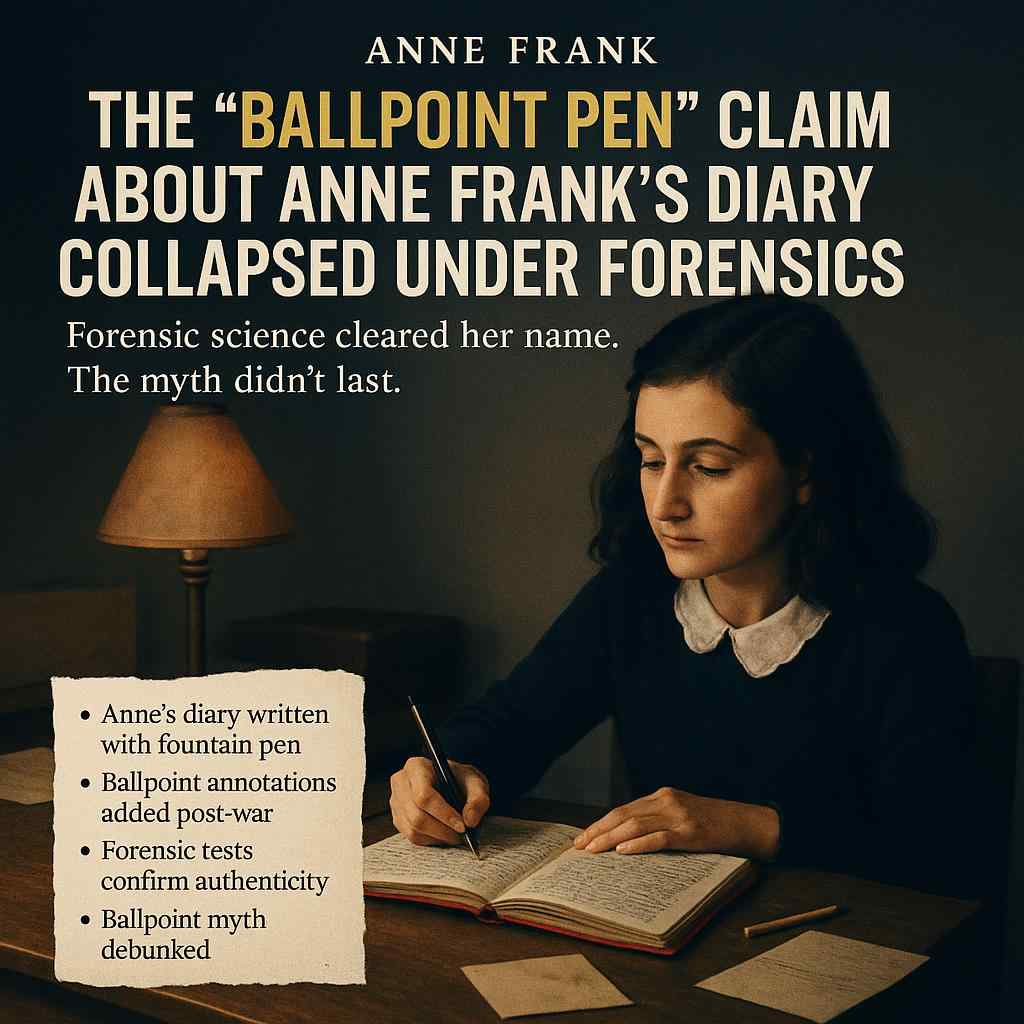
Forensic document examiners proved that Anne Frank wrote her diary with a fountain pen and pencil between 1942 and 1944. The infamous ballpoint pen markings were later additions, not part of Anne’s original writing, and scientific analysis confirmed the diary’s authenticity.
Why Did People Question Anne Frank’s Diary?
In the 1980s, rumors began to circulate that Anne Frank’s famous diary wasn’t entirely genuine. The spark? Reports that some pages contained ballpoint pen ink. Since ballpoint pens were not available in Amsterdam until after World War II, skeptics claimed this was evidence of forgery. The myth spread quickly, casting doubts on one of the most important personal records of the Holocaust.
What Did Forensic Testing Reveal?
Forensic document examiners were called in to settle the question. Their job: determine exactly what kind of ink and paper made up Anne’s diary, and who wrote the words inside. The Netherlands Forensic Institute and other experts conducted a battery of tests. They examined the ink, the paper, and the handwriting itself.
Here’s what they found: Anne Frank wrote her diary entries between 1942 and 1944 using a fountain pen and pencil, not a ballpoint pen. The only ballpoint pen ink appeared on two loose sheets—not in the main diary itself. These annotations were added decades later by a researcher, not by Anne or anyone during the war.
How Did Examiners Authenticate the Diary?
Forensic document examination is about more than just ink. Experts look at the paper’s age, the composition of the ink, and—crucially—the handwriting itself. In this case, the Netherlands Forensic Institute confirmed that the diary’s paper and ink matched materials available in the early 1940s. Handwriting experts compared every page to known samples of Anne Frank’s writing, finding a consistent match throughout the diary.
The infamous ballpoint pen marks? They stood out immediately. Ballpoint ink has a different chemical makeup and appearance from fountain pen ink. The examiners traced these marks to post-war annotations, not to Anne herself.
What Document Examiners Actually Do in Cases Like This
When the authenticity of a historical document is challenged, forensic document examiners follow a careful process:
- They analyze the ink and paper using scientific methods to determine their age and composition.
- They examine handwriting characteristics—such as letter formation, slant, spacing, and pressure—to compare questioned entries to known samples.
- They look for signs of additions, erasures, or alterations, and identify whether any part of the document was written at a different time or by a different hand.
- They document every step, so their findings can stand up in court or in the court of public opinion.
In Anne Frank’s case, this process revealed the truth: her diary was authentic, and the ballpoint pen myth was just that—a myth.
What Does This Mean for You?
If your family is facing questions about a will, a signature, or any important document, the lesson is clear: science matters. Keep the original document safe—don’t write on it, staple it, or try to repair it. The sooner you involve a qualified forensic document examiner, the better your chances of getting clear answers based on evidence, not rumor.
Frequently Asked Questions
What happened in the Anne Frank diary case?
Claims arose in the 1980s that parts of Anne Frank’s diary were forged with a ballpoint pen, but forensic examiners proved the diary was authentic and written with a fountain pen and pencil.
When did the Anne Frank diary controversy happen?
Anne Frank wrote her diary between 1942 and 1944. The ballpoint pen controversy and forensic investigations occurred in the 1980s.
What was the outcome of the Anne Frank diary forgery claims?
Forensic analyses confirmed that Anne Frank’s diary was authentic, and the ballpoint pen markings were later additions by a researcher, not part of Anne’s original writing.
Was the handwriting or document ever questioned, and what role did document examination play in the Anne Frank diary case?
Yes, the diary’s authenticity was questioned due to ballpoint pen ink. Forensic document examiners determined the diary was written with period-appropriate materials, and handwriting experts matched the entries to Anne Frank’s known writing.
How do forensic document examiners authenticate historical documents like Anne Frank’s diary?
They analyze ink and paper for age and composition, and compare handwriting to known samples to determine authenticity.
What should families do if they have a questioned will or document?
Keep the original document safe, avoid altering it, and consult a qualified forensic document examiner as soon as possible.
If you’re dealing with a questioned will, signature, or document, Handwriting Experts Inc. can help. Visit HandwritingExpertUSA.com or call 1-800-980-9030.