Are Handwriting Experts Used in Courts?
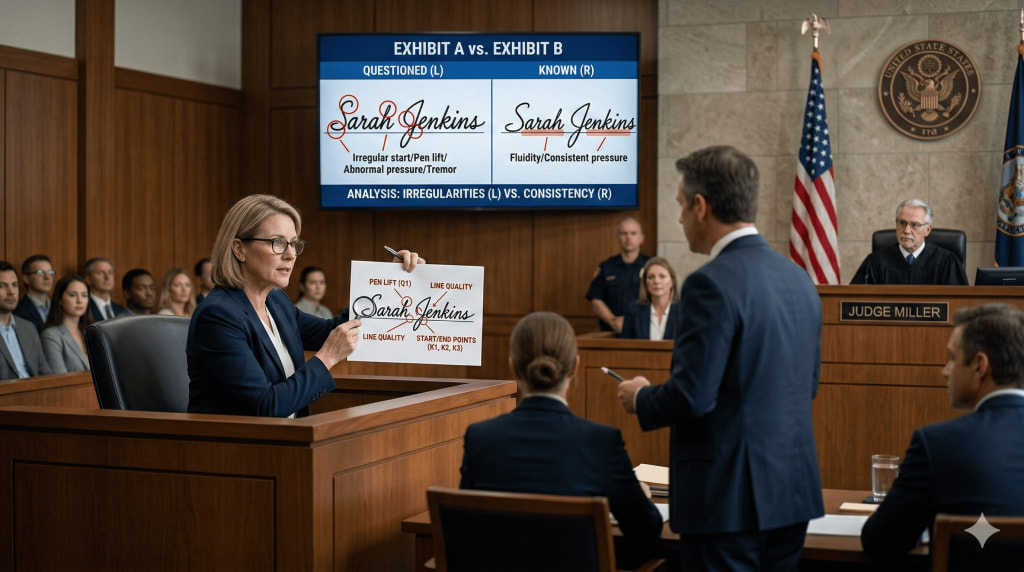
Of course they are. In fact, all kinds of experts are used in courts. It’s called an expert witness.
An expert witness is different than a lay witness, who does not have a background in law or giving testimony.
A lay witness is a “layperson” or random person who happened to be involved in legal matter purely through circumstance.
An example of a lay witness would be a passerby who saw a car accident. They could be called into court to give their recollection of the event and basically say, “Hey judge, I saw the accident, this is what happened”.
How is an expert witness different than a lay witness?
An expert witness is supposed to be an unbiased third party, not associated with and not knowing any of the parties involved in the trial, who has expertise in a forensic field of analysis, like blood spatter, psychology, or yes, even handwriting.
Handwriting experts (specifically forensic document examiners) are often used as expert witnesses in trials- most commonly in probate court (which handles a deceased person’s will or property) or trials involving check fraud or forgery.
When do I need a handwriting expert for court?
Handwriting analysis is used not just for civil cases, but also for criminal cases. It’s a science that has helped solve crimes and uphold justice in courts of law for over a century.
What happens after I hire an expert witness for my trial?
Bart Baggett
The Nation’s Leading Forensic Handwriting Expert
CEO of Handwriting Experts Inc.
Forensic Document Examiner • Expert Witness • Legal Consultant
“We solve million dollar forgery cases.”
Telephone: 1-800-980-9030
YouTube: @thehandwritingexpert
LinkedIn: bartbaggett
Facebook: bartbaggett
https://www.instagram.com/forensichandwritingexpert
https://www.tiktok.com/@handwritingexpertsinc
—————————————————————-
FAQ
—————————————————————-
Q1: Are handwriting experts used in court?
A1: Yes. Forensic document examiners are regularly called as expert witnesses in both civil and criminal trials, particularly in cases involving forgery, check fraud, and disputed wills.
Q2: What is the difference between an expert witness and a lay witness?
A2: A lay witness is someone who witnessed an event by circumstance, such as a bystander at an accident. An expert witness is an unbiased third party with specialized forensic expertise who provides professional analysis to the court.
Q3: What types of cases use handwriting experts?
A3: Handwriting experts are most commonly used in probate court involving wills and estates, check fraud cases, forgery investigations, and other civil or criminal matters involving questioned documents.
Q4: How long has forensic handwriting analysis been used in courts?
A4: Forensic handwriting analysis has been used in courts since 1910, including by the FBI, to examine ransom notes, forged signatures, and other questioned documents.