Yes, absolutely. My name is Bart Baggett. I’m a forensic document examiner. I’ve trained dozens of people around the world to help them become forensic document examiners as well. And what we do as a profession is determine whether a document is fake.
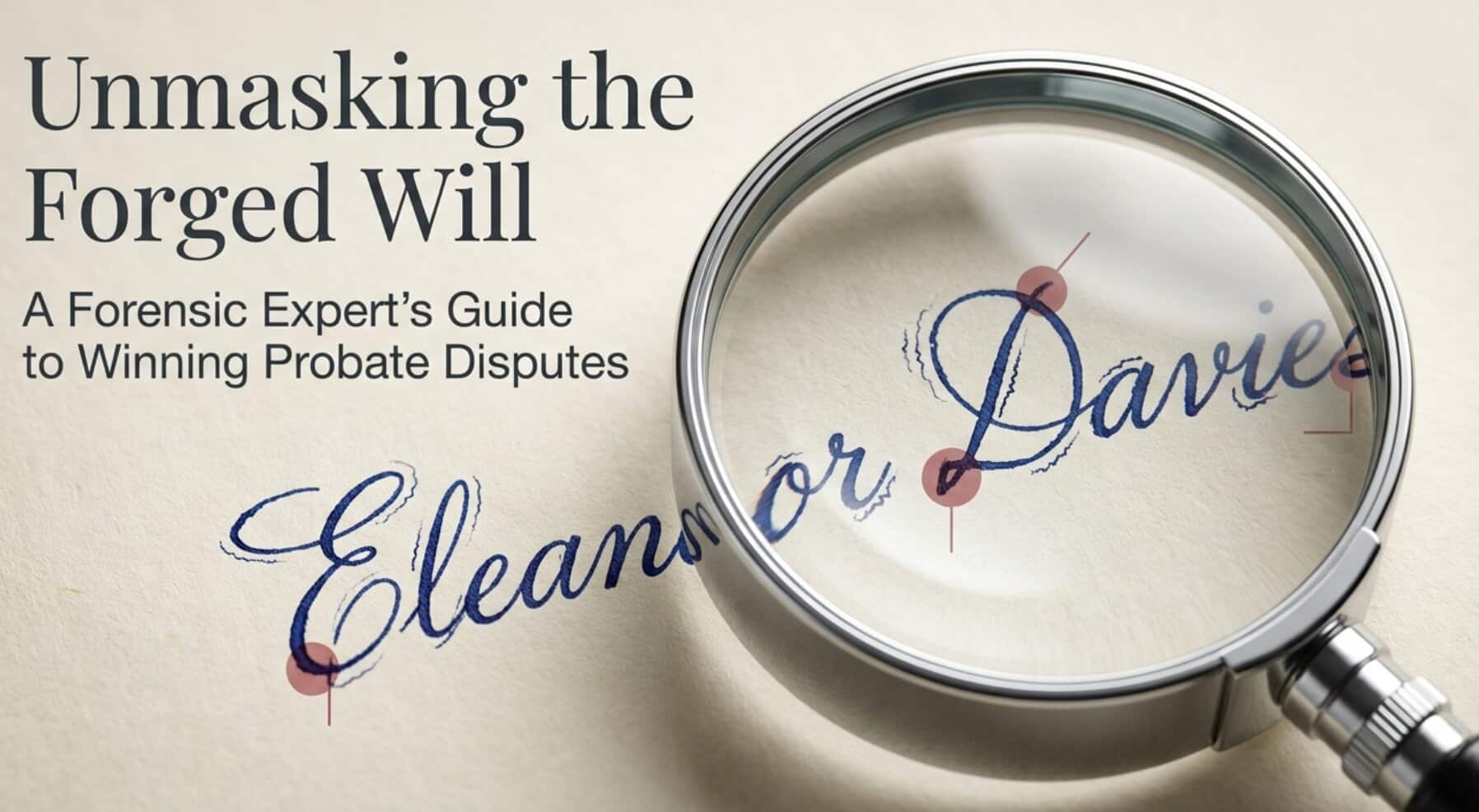
The last will and testament, along with trust documents and health directives, is how people ensure that, upon their passing, their assets go to the right people. Good estate planning makes that process clear. But when it isn’t clear, or when someone decides to make it unclear, that’s where I come in.
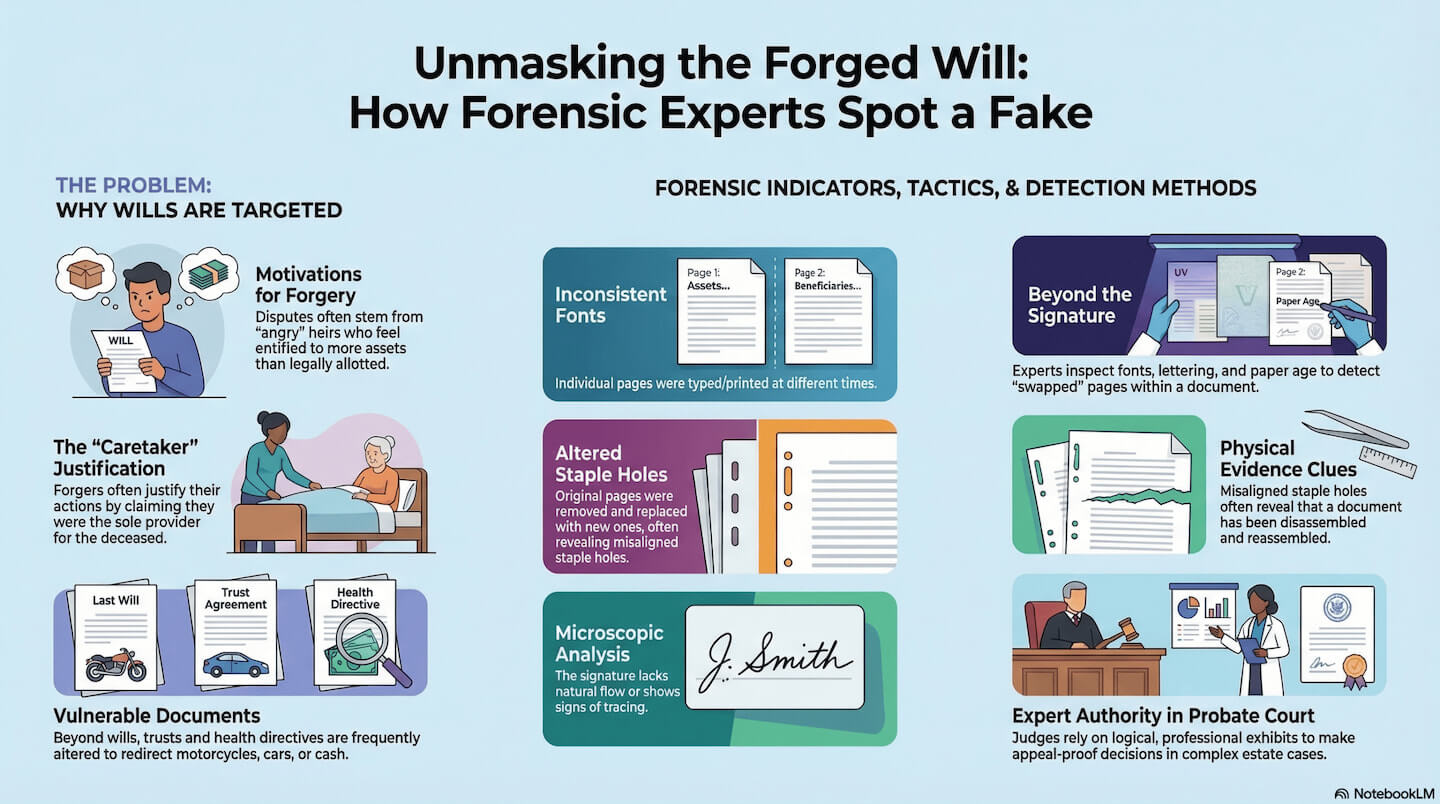
Why Wills Get Contested
The reason I get hired so much for last wills and testaments is that the kids, nephews, ex-girlfriends, and ex-wives are angry, and they’re angry enough to file an injunction and put themselves in front of a judge to say, “I want that person’s stuff. He loved me more.” Sometimes children, even second or third generation, say, “Hey, he wrote me this will and cut all of you out. You guys are jerks.”
What’s more common is that the person taking care of the old man or the old woman says, “You guys haven’t been around for years. You’re off in South Dakota. You don’t need the money.” It’s a story I hear often: the caregiver who hasn’t been compensated, who feels overlooked, and who convinces themselves they deserve more. And so they justify it in their head, creating a fake will and testament. They end up typing “Will” in those documents. There are a lot of things that go awry with wills and testaments.
What a Forensic Examiner Actually Examines
The signature is the main piece of evidence on the signature page, but it’s not the only piece of evidence. One of the reasons the judges and attorneys really like me to go to court and review all the pages of a testament or trust is that sometimes the third or fourth page may have been changed. And that page has information about the car, the motorcycle, the Shelby Mustang, or the trustee. The most important details may have been changed. A page might have been swapped out, and then you have to look at the fonts, the lettering, the age of the paper, and even the staple holes.
How the Process Works
You have to get a forensic document examiner if you think a document is forged. Now there is precedent for experts being allowed in probate court. It’s very common, I would say, of all the court cases I’ve testified in. There are probably four or five experts in any major city who handle probate work. Judges appreciate expert testimony because it provides a sound, evidence-based foundation for their rulings—one that is less likely to be overturned on appeal. They appreciate an expert witness who’s logical and reasonable and professional, who can say, “Yes, judge. I’ve looked at it. We believe this to be authentic (or not).”
What happens more often than not, though, is that at least in my cases or with people on our team, our letters are so convincing, and we have such good exhibits and good photography. The other side just capitulates. The other side just quits and says, “Man, I can’t find a hammering expert to go against those people because they did it right.” And that’s the whole point. If we tell the truth and you have exhibits strong enough to support it, then you shouldn’t need a second expert.
You need to ask yourself if you think somebody forged your dad’s will or your mom’s will, or if you’re part of a recent business going on in the estate; that is exactly why you would hire a forensic document expert.
My name is Bart Baggett, and I’m a forensic document examiner with decades of experience in exactly this kind of case. If you need a document examining expert, we have four offices. Give us a call. One of our assistants can help you determine whether a forensic document examiner is what you need.
If you suspect someone has forged a loved one’s will, don’t wait. A forensic document examiner can tell you quickly whether you have a case worth pursuing. That answer can save you considerable time and legal expense. We work with attorneys and individuals alike, and you don’t need a lawyer to make the first call. Reach us at handwritingexpertusa.com.
Bart Baggett
The Nation’s Leading Forensic Handwriting Expert
CEO of Handwriting Experts Inc.
Forensic Document Examiner • Expert Witness • Legal Consultant
“We solve million-dollar forgery cases.”
Telephone: 1-800-980-9030
YouTube: @thehandwritingexpert
LinkedIn: bartbaggett
Facebook: bartbaggett
https://www.instagram.com/forensichandwritingexpert
https://www.tiktok.com/@handwritingexpertsinc
—————————————————————-
FAQ
—————————————————————-
Q1: What can a forensic document examiner detect in a will?
A1: A forensic document examiner can detect forged signatures, swapped pages, altered fonts, mismatched paper age, and inconsistent staple holes in a last will and testament.
Q2: Why are wills commonly forged?
A2: Wills are often forged by caregivers or estranged relatives who feel overlooked by the deceased and seek to redirect assets to themselves.
Q3: Can a forensic document examiner testify in probate court?
A3: Yes. Forensic document examiners are regularly permitted as expert witnesses in probate court, where judges value their evidence-based testimony as a sound foundation for rulings less likely to be overturned on appeal.
Q4: Do I need a lawyer to hire a forensic document examiner?
A4: No. You can contact a forensic document examiner directly. They work with both attorneys and individuals to determine whether a will or other document has been forged.