The Craziest Cases I’ve Worked as a Forensic Handwriting Expert
Case #1: Face-to-Face With a Double Homicide Suspect
Why This Mattered Forensically
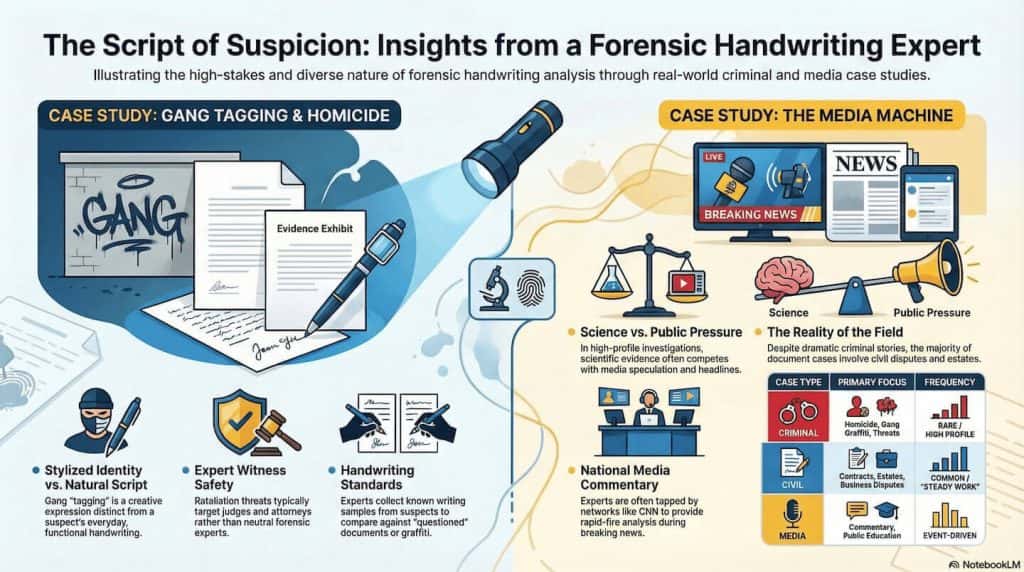
Gang tagging isn’t casual handwriting. In that subculture, tagging is a form of identity and creative expression. Many gang members develop a distinctive script style that differs from their everyday handwriting—sometimes intentionally—and that’s an important nuance in any comparison.
What Surprised Me Most
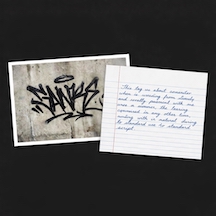
People imagine jailhouse interactions as hostile. In my experience that day, the suspect was cordial and cooperative. He wrote what I asked him to write. And his natural handwriting, separate from stylized tagging, was some of the most precise, looped, and visually striking handwriting I’ve ever seen.
Did the Tarp Graffiti Go to Court?
Even though I observed similarities between the graffiti and the individual’s writing, the “tarp testimony” was not ultimately brought into evidence. The testimony I provided in court related to a letter he wrote while in prison.
For those who wonder whether this kind of work is dangerous, here is what I learned from people familiar with gang culture: threats are more commonly directed toward judges and attorneys than expert witnesses, especially when the expert is seen as “doing their job,” not picking sides.
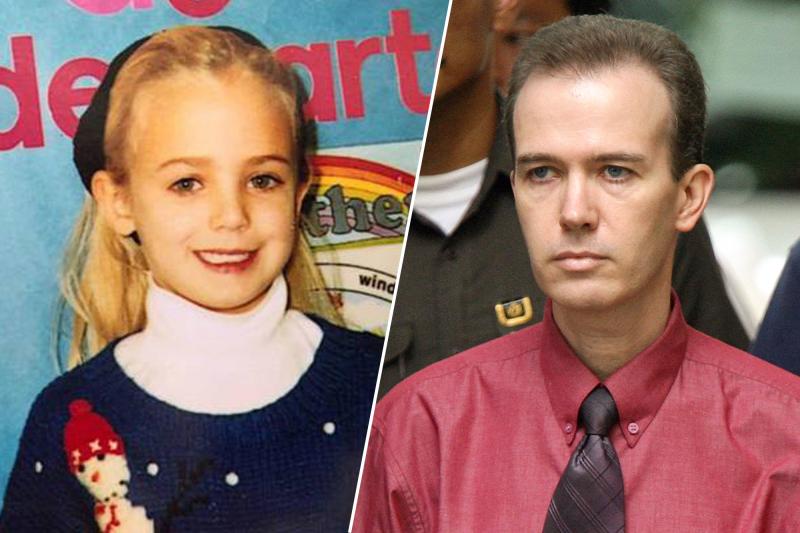
Case #2: The JonBenét Ramsey Media Whirlwind
The second “craziest” experience wasn’t about sitting across a table from a criminal suspect. It was about being swept into the media machine.
During the period when authorities announced they believed they had identified JonBenét Ramsey’s killer and arrested a suspect in Thailand—John Mark Karr—I ended up doing a rapid series of radio and TV appearances. It became a three- to four-day media sprint, including a sit-down with the late Larry King on CNN to discuss the case from a handwriting and document-analysis perspective.
Important clarification
I was not involved in the original JonBenét Ramsey case. My mentor, Phyllis Mattingly, served as the official police-hired handwriting expert in Colorado. I learned about elements of that case through her involvement and the broader forensic discussion surrounding it.
High-profile cases are always “interesting” in a different way, because the science can become secondary to headlines, speculation, and public pressure.
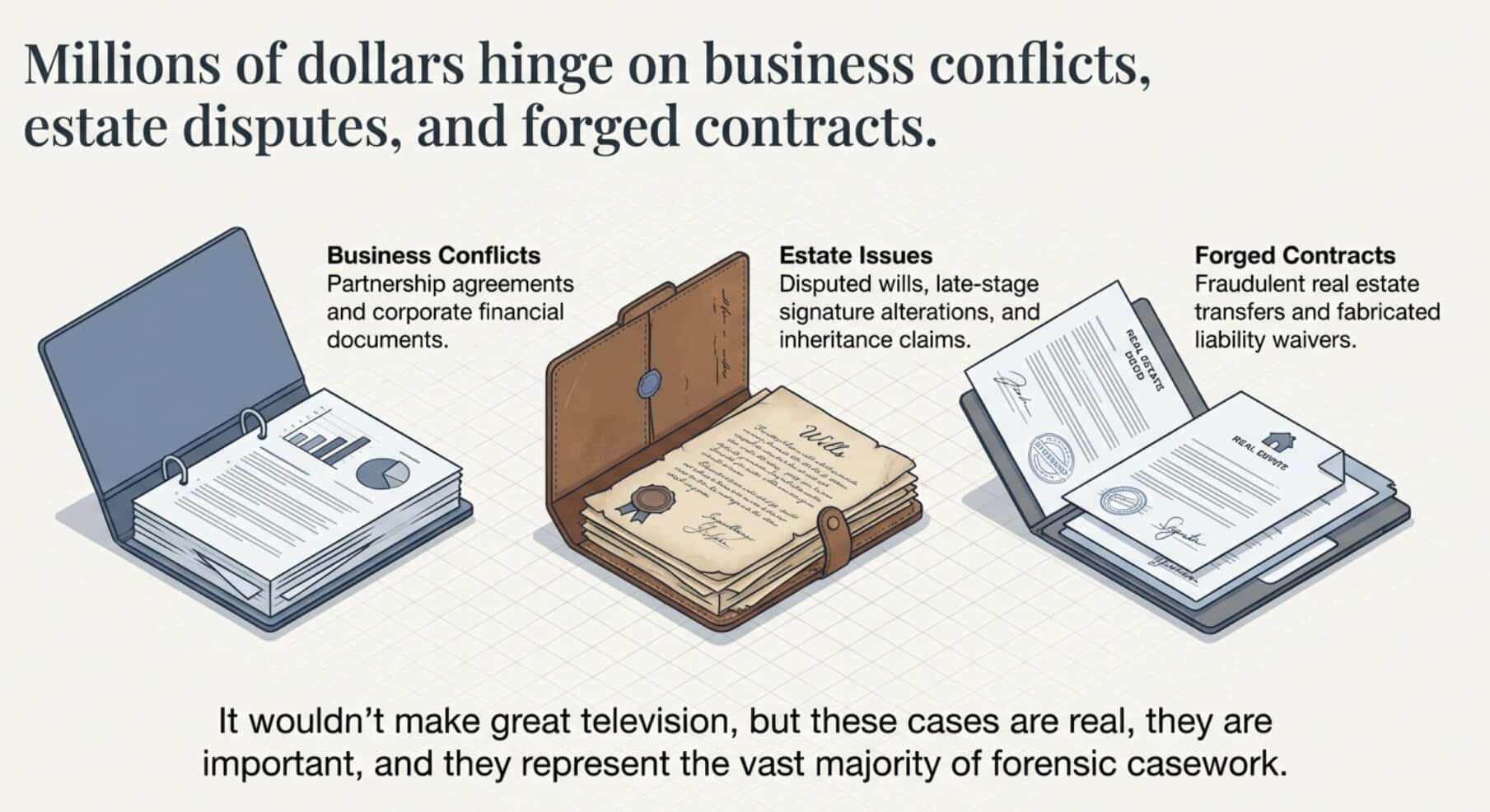
The Reality Behind Most Forensic Cases
People love dramatic criminal stories, but the truth is, most documented cases are civil disputes. A lot of them are about money—business conflicts, estate issues, contracts, and people suing each other. They’re real, they’re important, but they wouldn’t always make great TV. That steady work is what keeps the lights on, and it’s also why having trained, court-qualified handwriting experts available across the United States and internationally matters so much.
Frequently Asked Questions
What is a forensic handwriting expert?
A forensic handwriting expert examines questioned documents and handwriting samples to determine authorship or detect forgery, often serving as an expert witness in civil and criminal court cases.
Can gang graffiti be used as handwriting evidence in court?
Yes, under the right conditions. A qualified examiner can compare stylized gang tagging to a suspect’s known handwriting, though the intentionally artistic nature of tagging requires careful analysis.
Was Bart Baggett involved in the JonBenét Ramsey case?
Bart was not part of the original casework. His mentor, Phyllis Mattingly, served as the police-hired handwriting expert in Colorado. Bart provided media commentary during a later development in the case.
What types of cases do forensic handwriting experts typically work on?
The craziest forensic handwriting expert cases get the most attention. However, forensic document cases involve civil disputes: contracts, estate challenges, business conflicts, and signature forgery.