How Long Does It Take to Analyze Handwriting for a Forgery Case?
This is one of the most common questions I get, and it’s a fair one. When you’re dealing with a forgery issue—especially involving a will, trust, or lawsuit—time matters. People want to know how long they’re going to be waiting before they get a clear answer.
In most cases, once all documents are provided, a complete forensic handwriting analysis is finished within 7 to 14 days. The hands-on examination may only take several hours, but organizing documents, reviewing originals, and writing a report usually determine the overall timeline.
Handwriting analysis plays an important role in forgery cases, will contests, and other legal disputes. The reason there isn’t a single universal timeline is simple: no two cases look the same. Some are straightforward. Others are document-heavy and take real preparation before an opinion can be reached.
Understanding the Forensic Handwriting Analysis Process
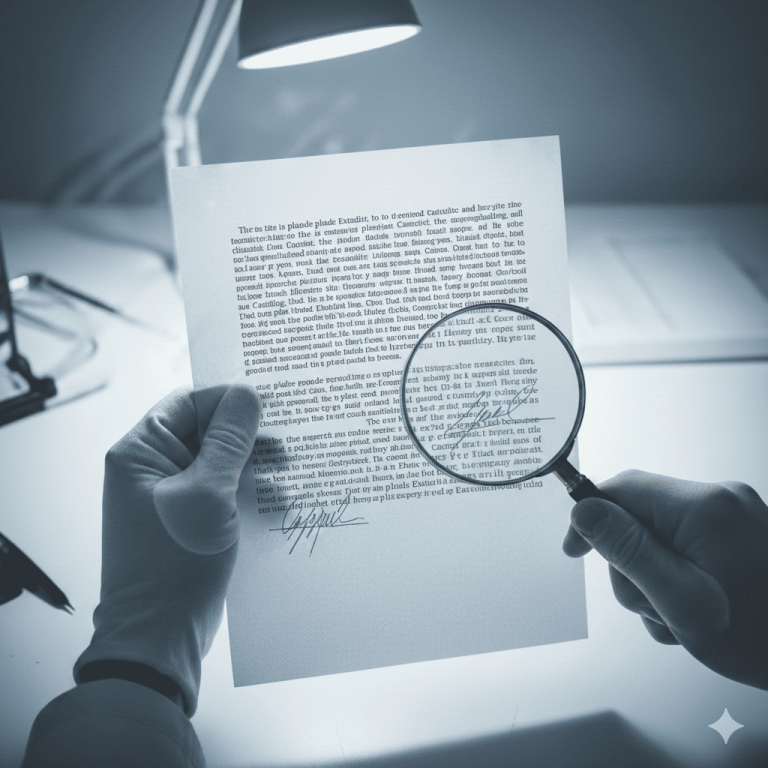
The examination itself involves a detailed comparison of questioned documents against known writing samples. This work is done using microscopes, specialized lighting, and high-resolution imaging tools designed for forensic document examination.
The actual analysis can take anywhere from a few hours to more than ten hours. It depends on what’s involved. Are there five known signatures or one hundred? Are there multiple wet-ink originals that need to be examined under a microscope, or is everything provided as scanned PDFs? Those details matter.
The quality, quantity, and format of the documents directly affect how long it takes to form an opinion and prepare a written report.
Time Spent on Document Preparation
What many people don’t realize is that the analysis itself is only part of the process. Before any real comparison work begins, documents have to be gathered, organized, labeled, and reviewed for suitability.
In some cases—especially larger trust and will disputes—this preparation phase can take significant time. I’ve handled cases where it took 18 hours just to organize and label hundreds of documents before the actual examination even started.
Typical Turnaround Time for Forgery Cases
For most cases, the total turnaround time is about 7 to 14 days after all necessary documents are provided. That timeframe allows the work to be done carefully, without rushing or cutting corners.
Some cases take longer. If original documents must be examined on-site, or if documents are difficult to obtain, the process can stretch into weeks or even months. Scheduling access to originals for microscopic examination is a common source of delay.

What Affects Speed and Cost
Turnaround time and cost are closely connected. Two factors matter most: urgency and availability.
- Expert availability: Experienced forensic document examiners often have full caseloads, which can mean waiting several weeks for work to begin.
- Rush requests: When a report is needed immediately—within days or over a weekend—the cost can increase significantly.
- Document quality: Poor scans, missing originals, or delayed materials can slow the process regardless of the expert’s schedule.
Practical Guidance for Clients
If timing allows, providing an expert with two to four weeks of lead time is usually ideal. That gives enough room for a thorough examination without the pressure and added cost of a rush request.
It’s always reasonable to ask about an expert’s current caseload and expected availability before moving forward. That conversation alone can prevent misunderstandings later.
Need Help With a Handwriting Case?
If you have questions about handwriting analysis or need help with a forensic document examination, you can visit handwritingexperts.com or handwritingexpertusa.com.
Understanding the process—and the timeline—puts you in a much better position to make informed decisions when forgery issues come up.