In the fall of 1888, London was gripped by fear. A series of brutal murders in Whitechapel had the public and the press searching for answers. Then, something unusual arrived at the Central News Agency: a letter written in red ink, signed with a name the world would never forget—Jack the Ripper.
Hundreds of letters claiming to be from Jack the Ripper were sent to police and newspapers in 1888. Most experts, including Scotland Yard, believe none were actually written by the killer.
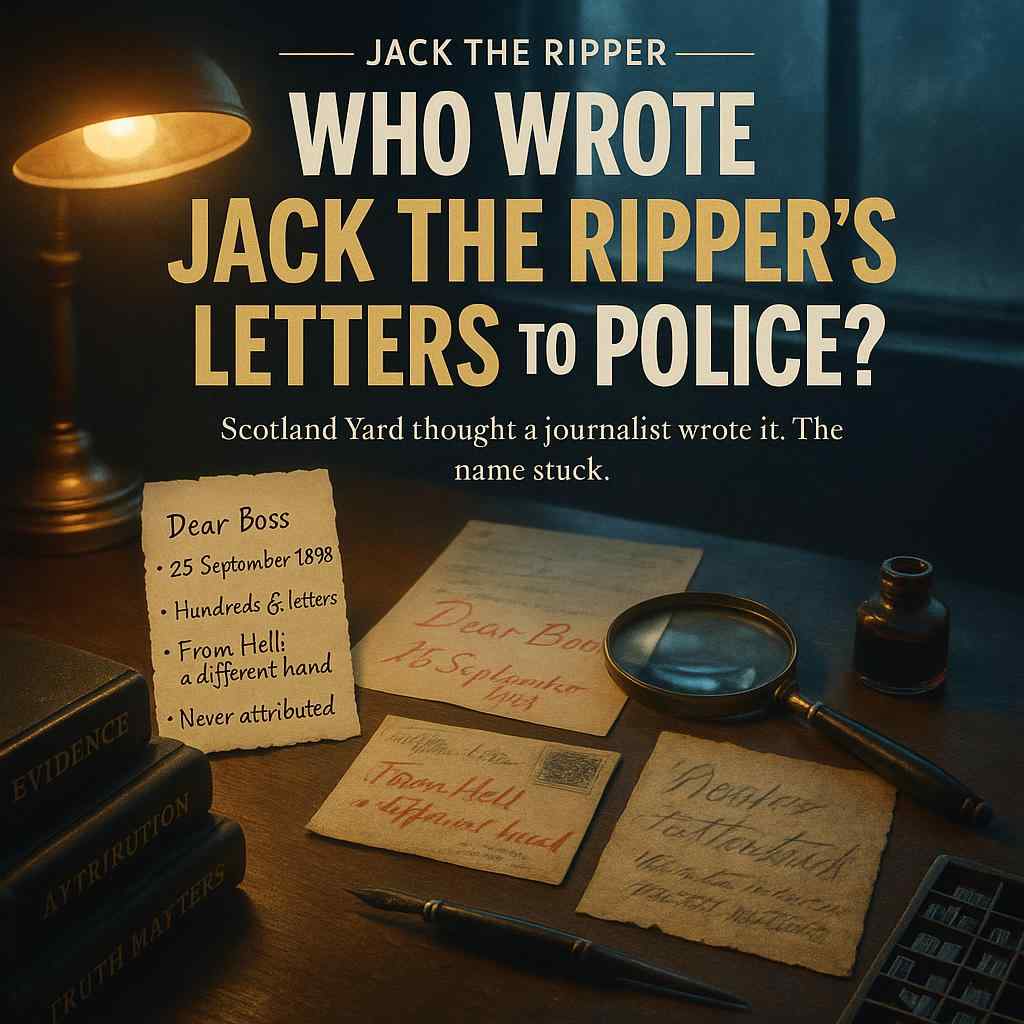
The letter, dated September 25, 1888, began with the now-famous words, “Dear Boss.” It described the murders in chilling detail and taunted the police. Just days later, a postcard in a similar hand arrived. The press published the letter, and the name “Jack the Ripper” entered history.
Why Did These Letters Matter?
The “Dear Boss” letter wasn’t the only one. In fact, hundreds of letters poured in over the next weeks and months, all purporting to be from the murderer. Some were crude, others eerily articulate. For police, the letters were both a distraction and a possible clue: if even one was genuine, it might reveal something about the killer.
But there was a problem at the heart of the investigation. With so many letters and no confirmed writing sample from the actual murderer, how could anyone know which, if any, were real?
What Did the Experts Find?
The National Archives, which now holds many of these documents, states plainly: there is no strong evidence that any of the letters were actually written by the murderer. The “Dear Boss” letter and the “Saucy Jacky” postcard appear to share a writer. The famous “From Hell” letter, which arrived with half a human kidney, was written in a visibly different hand.
Years after the murders, two senior Scotland Yard officials weighed in. Robert Anderson, who led the investigation, wrote that the original letter was likely “the creation of an enterprising London journalist.” Melville Macnaghten, another top official, remarked, “I have always thought I could discern the stained forefinger of the journalist.” Neither named a suspect, and no confession ever emerged. The true author of the letters remains unknown.
How Does a Document Examiner Approach a Case Like This?
In any questioned document case, the first step is to ask: what do we know about the writer? In the Ripper case, investigators had plenty of questioned documents—the letters themselves—but no authenticated writing from the killer to compare them to. That’s a major limitation.
Document examiners typically look for similarities and differences in writing style, letter formation, pressure, rhythm, and other features. But these comparisons are only useful if you have reliable known writing. Without that, you can compare questioned documents to each other—like the “Dear Boss” letter and the “Saucy Jacky” postcard—but you can’t identify the writer with confidence.
It’s a reminder: a signature or a name tells you what was written, not who held the pen. Attribution always comes back to what you can prove, not what you suspect.
What Should You Do If You Face a Questioned Document?
If you’re dealing with a questionable will, letter, or signature, the first step is simple: preserve the original. Don’t write on it, staple it, or store it somewhere it might be damaged. Get a qualified document examiner involved early. The more reliable known samples you can provide, the stronger the examination will be.
In my experience, the right questions at the start—about what is known, what is questioned, and what can truly be compared—can save everyone time, money, and uncertainty down the line.
Frequently Asked Questions
What happened in the Jack the Ripper letters case?
In 1888, hundreds of letters claiming to be from Jack the Ripper were sent to police and newspapers in London. The most famous, the “Dear Boss” letter, introduced the name “Jack the Ripper” to the world.
When did it happen?
The first famous letter, “Dear Boss,” was dated 25 September 1888 and received by the Central News Agency on 27 September 1888. The “From Hell” letter arrived on 16 October 1888. The investigation and correspondence continued throughout late 1888.
What was the outcome?
The National Archives states there is no strong evidence that any of the letters were actually written by the murderer. Scotland Yard officials later suggested the letters were likely a journalist’s invention. The true author remains unknown.
Was the handwriting or document ever questioned, and what role did document examination play?
The handwriting was questioned, but with no authenticated writing from the killer, examiners could only compare the letters to each other. No definitive identification was possible.
How would a document examiner approach the Jack the Ripper letters?
A document examiner would compare the handwriting in the letters to each other and to any known samples. Without reliable known writing from the suspect, attribution is not possible.
Why is it important to have known handwriting samples in a questioned document case?
Known handwriting samples allow examiners to compare questioned writing to authentic writing, making identification possible. Without them, conclusions are limited.
What should someone do if they have a questioned will or letter today?
They should preserve the original document, avoid marking or damaging it, and consult a qualified document examiner early in the process.
If you’re dealing with a questioned will, signature, or document, Handwriting Experts Inc. can help. Visit HandwritingExpertUSA.com or call 1-800-980-9030.