In February 1477, a young woman named Margery Brews sat down in Topcroft, England, to write a letter to her fiancé, John Paston. Her words, penned in a flowing medieval script, expressed not only affection but also worry. The fate of their marriage seemed to hang on a dowry dispute between their families—a common problem in 15th-century England. Margery’s letter, heartfelt and personal, has survived for over five centuries, but for much of that time, its full story remained hidden in faded ink and archaic handwriting.
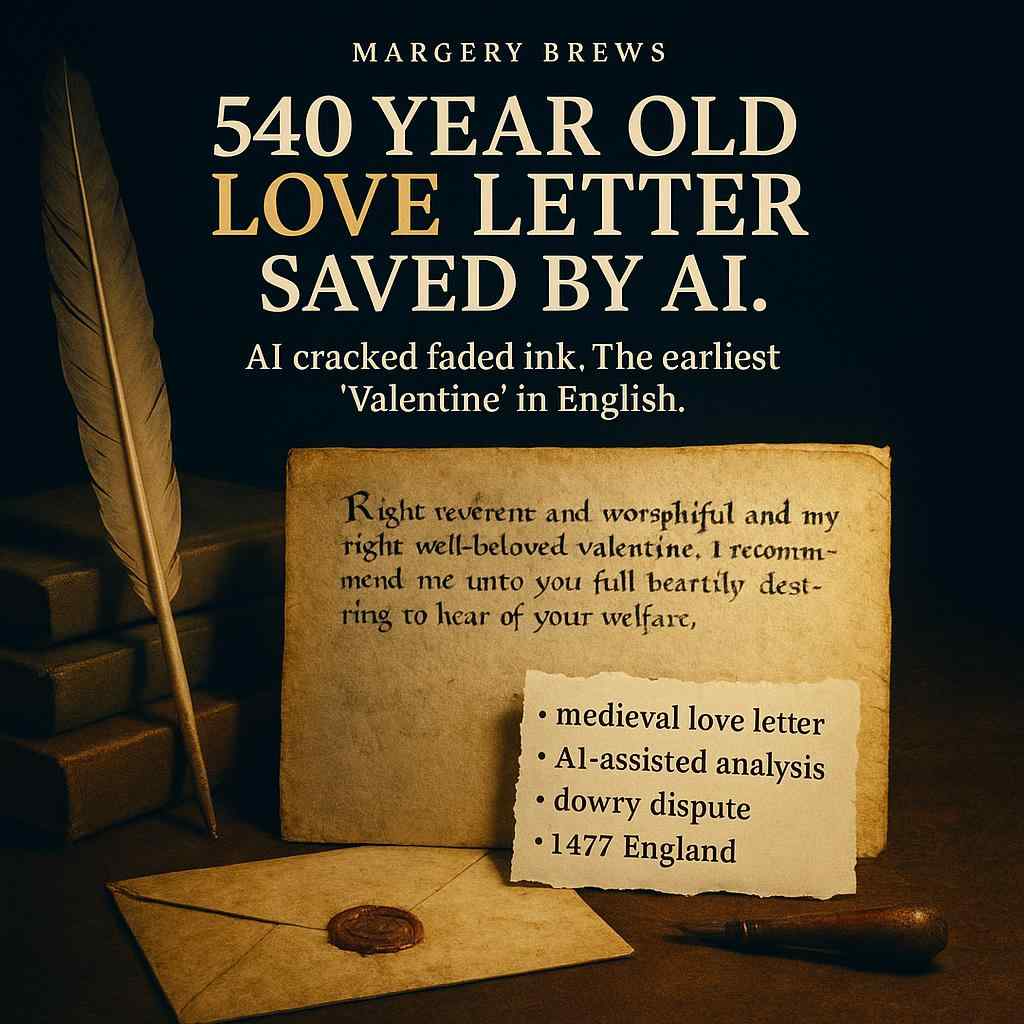
Recently, AI technology helped decipher Margery Brews’ 1477 love letter to John Paston, revealing one of the earliest uses of ‘Valentine’ in English and offering a rare glimpse into medieval courtship and dowry negotiations.
The Oldest English Valentine: Why This Letter Matters
What sets Margery’s letter apart isn’t just its age. When she addressed John as her “right well-beloved Valentine,” she gave us one of the earliest known uses of the word “Valentine” in English. The letter is more than a romantic note; it’s a window into the personal agency Margery showed during marriage negotiations, a rarity for women of her era. For historians and anyone interested in the roots of Valentine’s Day, this document is a treasure.
The letter is now part of the Paston Letters collection—a remarkable archive that captures the lives, struggles, and private thoughts of English gentry during the 15th century. But for centuries, the letter’s details were locked away by the challenges of medieval script and the slow fading of ink over time.
How Did AI Crack the Code?
Deciphering a 540-year-old letter isn’t easy. Medieval handwriting is filled with unfamiliar characters, abbreviations, and spelling that no longer match modern English. Add to that the problem of ink fading after centuries, and you have a document that resists easy reading even by trained scholars.
Recently, AI-assisted analysis changed that. By processing high-resolution images of the letter, AI tools were able to enhance faded ink and interpret complex abbreviations. This technology made it possible to transcribe and translate Margery’s words with a level of accuracy and clarity that manual methods alone couldn’t achieve. The result: a clear view into Margery’s thoughts, her negotiations about dowry, and her willingness to marry John even if the financial terms weren’t ideal.
What a Document Examiner Looks For
In cases like this, a forensic document examiner would start by studying the physical document: the ink, paper, and handwriting style. With historical documents, the examiner pays special attention to the era’s writing conventions and natural variations in letterforms. Faded ink presents a challenge, so examiners often use magnification, ultraviolet light, or digital imaging to reveal hidden details.
When technology like AI enters the picture, it becomes a powerful partner. AI can quickly process thousands of handwriting samples or highlight subtle ink traces that the human eye might miss. But even with advanced tools, the examiner’s judgment remains crucial—knowing what to look for, what counts as natural variation, and when a detail is significant or just a quirk of old parchment.
What We Learned from Margery’s Letter
The transcription of Margery Brews’ letter does more than add a line to the history of Valentine’s Day. It shows how personal and direct communication could be, even within the constraints of 15th-century society. Margery’s willingness to speak openly about her feelings and her future is striking. The letter also highlights the practical realities of marriage at the time—negotiations over dowry, family expectations, and the quiet strength required to navigate them.
This case is a reminder that sometimes, the most valuable details are the ones hidden in plain sight, waiting for the right tools—and the right eyes—to bring them to light.
If You Face a Challenging Document
Most families won’t encounter a 540-year-old love letter, but the lesson holds: when a document is unreadable, faded, or hard to interpret, don’t give up. Preserve the original. Avoid writing on it, stapling, or exposing it to further damage. Seek expert help early—sometimes, technology and a trained examiner can recover meaning you thought was lost.
Frequently Asked Questions
What happened in the Margery Brews 1477 love letter case?
In 1477, Margery Brews wrote a heartfelt letter to her fiancé John Paston, expressing love and concerns over a dowry dispute. The letter is notable for being one of the earliest English ‘Valentine’ messages.
When did the Margery Brews letter case happen?
The letter was written in February 1477 in Topcroft, England. Modern AI analysis of the letter took place centuries later.
What was the outcome of the Margery Brews love letter case?
AI-assisted analysis successfully deciphered the faded ink and archaic script, revealing the letter’s content and historical significance.
Was the handwriting or document ever questioned, and what role did document examination play in the Margery Brews case?
The letter’s authenticity was not in doubt, but its content was obscured by faded ink and complex handwriting. AI and expert analysis were used to transcribe and interpret the letter.
How did AI help decipher Margery Brews’ 1477 love letter?
AI technology enhanced faded ink and interpreted complex medieval abbreviations, making it possible to transcribe and translate the letter accurately.
What should you do if you have a faded or unreadable document?
Preserve the original, avoid further damage, and seek expert analysis early. Modern technology and trained examiners can often recover lost information.
If you’re dealing with a questioned will, signature, or document, Handwriting Experts Inc. can help. Visit HandwritingExpertUSA.com or call 1-800-980-9030.