On a cold night in March 1932, the twenty-month-old son of famed aviator Charles Lindbergh was taken from his nursery in Hopewell, New Jersey. The nation watched in shock as a ransom note was found on the windowsill. Over the following weeks, twelve more notes arrived—each bearing a strange signature device: two interlocking circles, a red center, and three punched holes.
Thirteen ransom notes in the Lindbergh kidnapping were linked to Bruno Hauptmann after eight document examiners testified that his handwriting matched the notes. The way police collected his writing samples, by dictating passages to him, remains controversial in forensic circles.
The Ransom Notes and Their Role
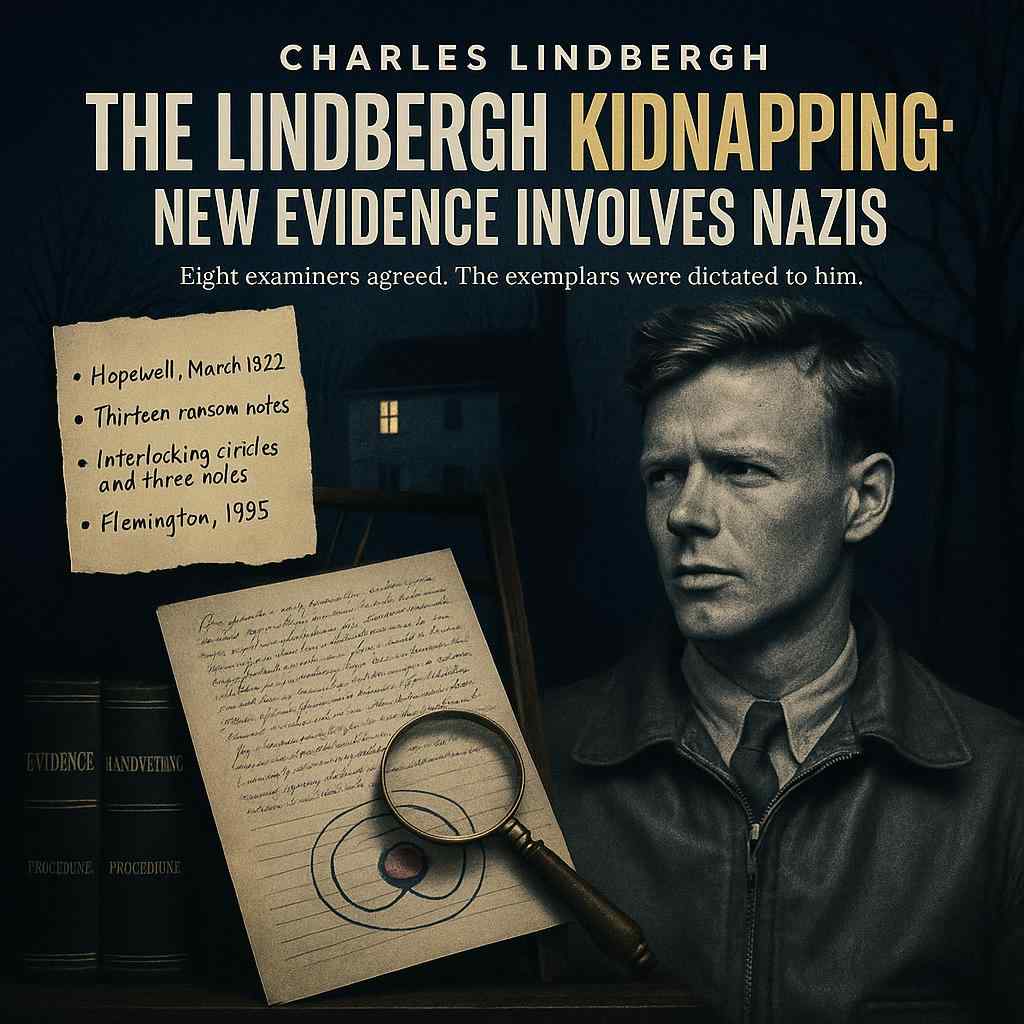
The ransom notes in the Lindbergh case were more than simple demands—they became central pieces of evidence. Each note shared unique features: the same hand-drawn device at the bottom, consistent misspellings, and certain habits like uncrossed t’s. Investigators believed these details could point to the author.
In September 1934, more than two years after the kidnapping, Bruno Richard Hauptmann was arrested. Police discovered over $13,000 in ransom bills hidden in his garage. But the prosecution needed more than just the money—they needed to show he was the author of the notes. That’s where handwriting analysis came in.
How the Handwriting Was Examined
Eight document examiners were called by the prosecution at Hauptmann’s trial in Flemington, New Jersey, in early 1935. They compared the ransom notes to samples of Hauptmann’s handwriting. The experts pointed to similarities in spelling mistakes, letter formations, and writing habits—such as his tendency to leave t’s uncrossed. These features also appeared in a notebook belonging to Hauptmann.
But there was a problem with the way police collected Hauptmann’s writing samples, known as exemplars. Instead of asking him to write freely, police dictated passages made up of words from the ransom notes. Hauptmann later testified that officers even spelled out words as he wrote. This kind of dictation can contaminate the sample, because the writer isn’t using his own spelling or natural habits—he’s following instructions. In forensic document examination, this is now recognized as a flawed method.
The Trial and Its Outcome
The trial began in January 1935 and ran until mid-February. Eight examiners testified for the state, while only one appeared for the defense. The jury heard about the ransom notes, the unique signature device, and the similarities in Hauptmann’s writing. But the case also involved other evidence: the marked ransom bills, the ladder found at the scene, and other circumstantial links.
On February 13, 1935, Hauptmann was convicted. He was executed in April 1936. The case became one of the most famous in American legal history—and its lessons continue to echo in forensic practice.
What Document Examiners Look For
In a case like this, a forensic document examiner compares known writing samples (exemplars) to the questioned document. They look at letter shapes, spacing, slant, pressure, and unique habits—like how someone dots their i’s or crosses their t’s. They also study spelling patterns, punctuation, and even how a person holds the pen.
But the quality of the exemplars is critical. If someone is told exactly what to write—or how to spell—it can mask their natural habits. That’s why current best practice is to collect both dictated and undictated samples, and to avoid spelling out words. The goal is to capture the writer’s true, unconscious patterns.
Lessons for Attorneys and Families
The Lindbergh case is a reminder: how handwriting samples are collected can shape the outcome of a case. If you face a questioned will, signature, or document, keep the original safe, avoid writing on or stapling it, and seek a qualified examiner early. And always ask how any exemplars were obtained—because a sample taken badly can undermine even the strongest evidence.
Frequently Asked Questions
What happened in the Lindbergh ransom note case?
In March 1932, Charles Lindbergh’s son was kidnapped from his home in Hopewell, New Jersey. Thirteen ransom notes with a unique signature device were sent. Bruno Hauptmann was arrested in 1934, and handwriting analysis became a key part of the trial.
When did the Lindbergh kidnapping and trial take place?
The kidnapping occurred in March 1932. Hauptmann was arrested in September 1934. The trial took place in Flemington, New Jersey, from January 3 to February 13, 1935. Hauptmann was convicted in February 1935 and executed in April 1936.
What was the outcome of the Lindbergh ransom note case?
Bruno Hauptmann was convicted of the kidnapping and murder of Charles Lindbergh’s son in February 1935 and executed in April 1936.
Was the handwriting or document ever questioned, and what role did document examination play in the Lindbergh case?
Yes, the handwriting on the ransom notes was questioned. Eight document examiners testified for the prosecution that Hauptmann wrote the notes, but the way his exemplars were collected—by dictation—remains controversial.
How do forensic document examiners compare handwriting in a case like the Lindbergh ransom notes?
Examiners compare letter shapes, spacing, slant, pressure, and unique writing habits between known samples and questioned documents. They also look for consistent spelling and punctuation patterns.
Why is the way handwriting samples are collected important in forensic cases?
If handwriting samples are dictated or spelled out to the writer, it can mask their natural habits. This can undermine the reliability of any comparison made by a document examiner.
What should someone do if they have a questioned will or signature today?
Keep the original document safe, avoid writing on or stapling it, and consult a qualified forensic document examiner early in the process.
If you’re dealing with a questioned will, signature, or document, Handwriting Experts Inc. can help. Visit HandwritingExpertUSA.com or call 1-800-980-9030.