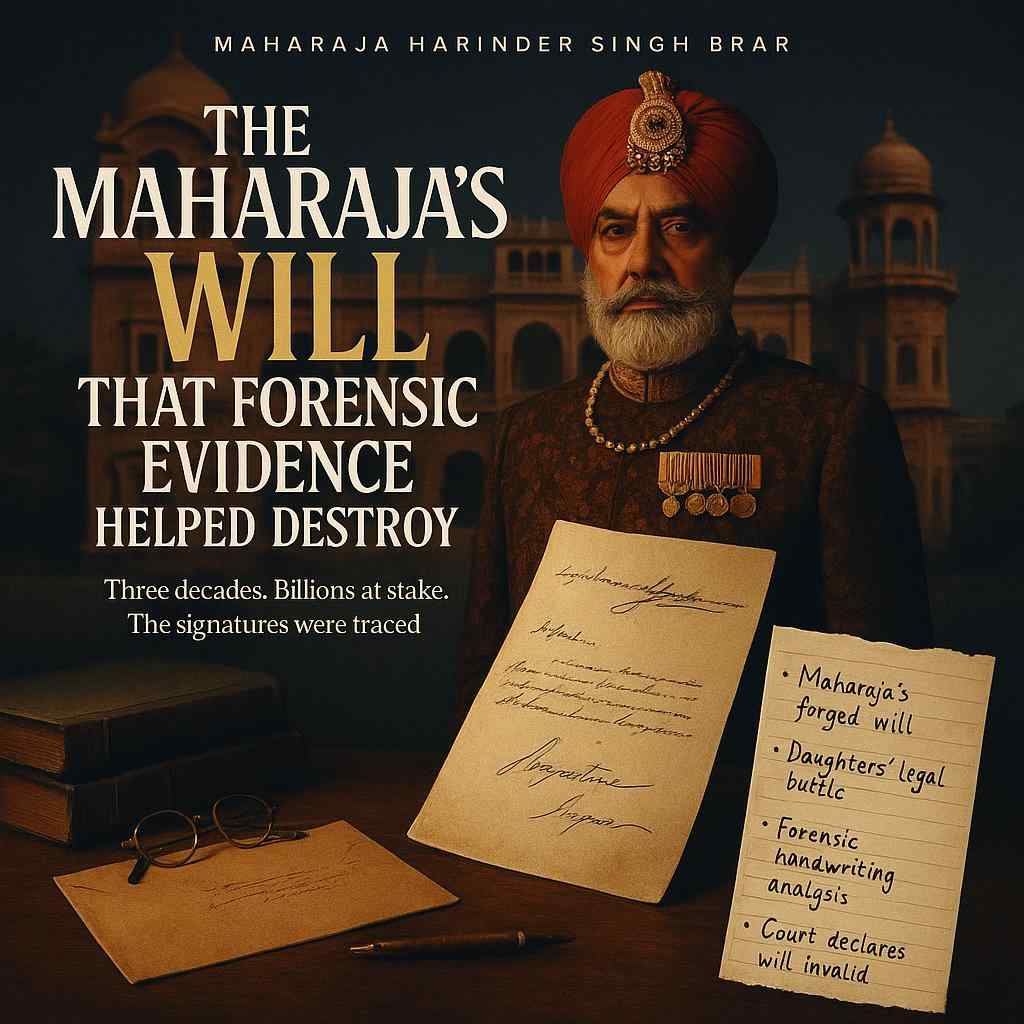
In 1989, the death of Maharaja Harinder Singh Brar, ruler of the Faridkot estate in India, set off one of the country’s most extraordinary inheritance battles. When a will surfaced, it seemed to seal the fate of his vast fortune—worth over ?20,000 crore—by leaving nearly everything to a charitable trust and excluding his daughters from their rightful inheritance. But as the legal drama unfolded, the story behind the signature would prove more compelling than the estate itself.
Forensic handwriting analysis revealed that the signatures on the Maharaja’s will were traced and did not match his genuine writing. This evidence led Indian courts to declare the will forged, ultimately awarding the estate to his daughters.
The Will That Changed Everything
The document in question was a will dated June 1, 1982. It appeared after the Maharaja’s death in 1989, raising immediate suspicions. According to the will, the Maharaja’s immense estate would be managed by the Maharawal Khewaji Trust, effectively cutting his daughters out of billions. For years, the daughters received only modest allowances while the trust controlled the palaces, land, and wealth.
The stakes were enormous, and the case quickly became a legal marathon, drawing in lawyers, family members, and eventually, forensic experts. The authenticity of the will became the central question: Was this truly the Maharaja’s last wish, or had someone manipulated history with a forged document?
How Forensic Handwriting Analysis Changed the Case
The turning point came with forensic examination. Dr. Jassi Anand, a handwriting expert, analyzed the will’s signatures and compared them to the Maharaja’s known handwriting samples. The findings were damning: the signatures on the will were traced, not naturally written. The ink and writing style did not match the Maharaja’s authentic hand.
In cases like this, a forensic document examiner studies not only the shape and slant of the letters, but also the pressure, speed, and rhythm of the writing. Traced signatures often lack the natural variation found in genuine writing—they can appear shaky, with uneven pressure and unnatural line quality. Forensic experts also examine the ink, paper, and any signs of tampering or unnatural hesitation.
Here, the examiner concluded that the will’s signatures were likely copied from other documents, a classic sign of forgery. This expert testimony became a cornerstone of the daughters’ challenge to the trust’s claim.
Thirty Years in Court: The Legal Battle
The Maharaja’s daughters fought for over three decades to reclaim their inheritance. The case wound through multiple courts, each scrutinizing the will, the trust’s actions, and the forensic evidence. The daughters argued that the will was a fabrication, designed to divert the estate away from the rightful heirs.
Throughout the legal proceedings, the forensic findings remained central. Judges weighed expert testimony about the traced signatures and mismatched ink against the trust’s defense. In 2022, the Supreme Court of India delivered a final verdict: the will was forged. The trust was dissolved, and the estate was awarded to the Maharaja’s daughters, closing the book on one of India’s most protracted legal battles.
What Does a Document Examiner Look For?
Cases like this highlight the power of forensic document examination. When authenticity is questioned, examiners look for:
- Natural variation in handwriting—no two signatures are exactly alike, but genuine signatures show consistent patterns.
- Line quality—genuine writing flows smoothly, while forgeries often appear shaky or uneven.
- Ink and paper consistency—differences may indicate tampering or substitution.
- Signs of tracing—such as hesitation marks, unnatural starts and stops, or indentations from underlying documents.
In this case, the telltale signs of tracing and mismatched ink provided clear evidence of forgery.
If You’re Facing a Questioned Will or Document
If you ever find yourself in a dispute over a will, contract, or other important document, take action early. Preserve the original document—do not write on it, staple it, or attempt to repair it. Consult a qualified forensic document examiner as soon as possible. Early expert analysis can make all the difference in court, especially when the stakes are high.
Frequently Asked Questions
What happened in the Maharaja Harinder Singh Brar will case?
After Maharaja Harinder Singh Brar’s death in 1989, a will surfaced leaving his estate to a trust and excluding his daughters. Forensic analysis showed the signatures were traced, leading courts to declare the will forged and award the estate to his daughters.
When did the Maharaja’s will dispute take place?
The dispute began after the Maharaja’s death in 1989 and continued until the Supreme Court’s final ruling in 2022.
What was the outcome of the Maharaja’s will case?
The Supreme Court of India ruled in 2022 that the will was forged, dissolved the trust, and awarded the estate to the Maharaja’s daughters.
Was the handwriting or document ever questioned, and what role did document examination play in the Maharaja’s will case?
Yes, forensic handwriting analysis revealed the signatures on the will were traced and did not match the Maharaja’s genuine writing. This evidence was central to the court’s decision to declare the will forged.
How does a forensic document examiner detect a forged signature?
A forensic document examiner compares the questioned signature to known genuine samples, looking for natural variation, line quality, ink consistency, and signs of tracing or tampering.
What should a family do if they suspect a will is forged?
Preserve the original document without altering it and consult a qualified forensic document examiner as soon as possible for expert analysis.
If you’re dealing with a questioned will, signature, or document, Handwriting Experts Inc. can help. Visit HandwritingExpertUSA.com or call 1-800-980-9030.