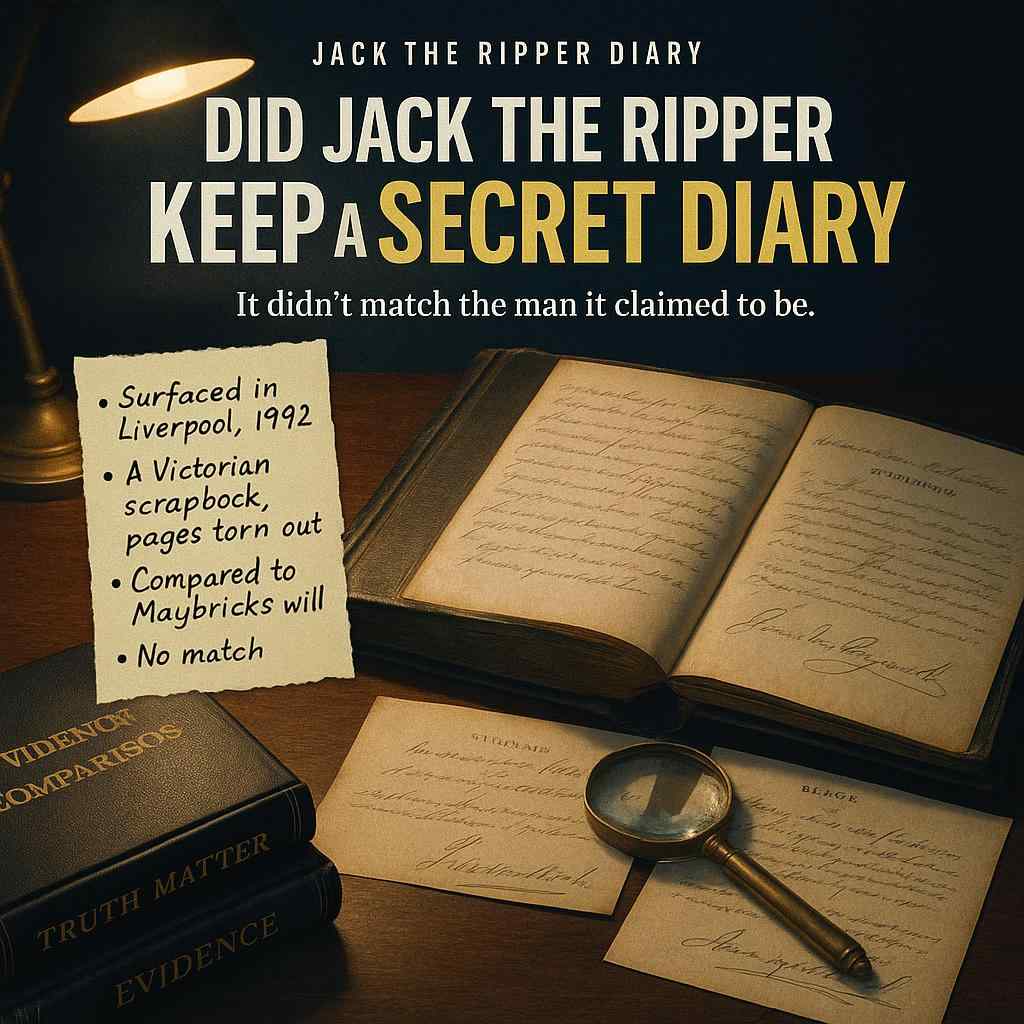
In 1992, a Victorian scrapbook turned up in Liverpool, igniting a storm of speculation. The book, with its first twenty pages torn out, read like a confession from the infamous Jack the Ripper. It was signed in the name of James Maybrick, a Liverpool cotton merchant who died in 1889. For a brief moment, it seemed as though the world might finally know the Ripper’s identity.
When the so-called Jack the Ripper diary surfaced in 1992, handwriting experts compared it to documents known to be written by James Maybrick. The diary’s writing didn’t match, and publishers withdrew the book before release.
What Was the Jack the Ripper Diary?
The diary was not a formal journal, but a Victorian scrapbook. Its pages were filled with a chilling narrative, allegedly from the Ripper himself, and ended with a signature: James Maybrick. The first twenty pages had been torn out, raising immediate questions about its origins and authenticity. The book surfaced unexpectedly, handed over by a Liverpool man, and quickly drew international attention.
Publishers and true crime enthusiasts saw a sensation in the making. If authentic, the diary could have solved one of history’s most notorious mysteries. But as with any sensational document, skepticism ran just as high as excitement.
How Did Experts Test Its Authenticity?
There are two main ways to examine a document like this: chemical analysis of the materials, and forensic comparison of the handwriting. In this case, both were attempted. Ink chemistry tests produced inconclusive results. Some tests suggested nothing ruled out a Victorian date, while others contradicted each other. Decades later, people still debate what the ink tests really proved. But the handwriting comparison was more straightforward.
Sue Iremonger, a questioned document examiner, compared the diary’s writing to two documents known to be written by Maybrick: his will and his marriage certificate. These two genuine documents matched each other. Neither matched the diary. Other examiners, including Maureen Casey Owens, looked at the diary independently and reached the same conclusion. The handwriting simply was not Maybrick’s.
What Did the Handwriting Show?
Handwriting comparison works on the principle that everyone’s writing has natural variation, but also certain consistent habits and features. When examiners have access to documents a person definitely wrote—like a will or marriage certificate—they can establish a baseline. They look at letter forms, slant, spacing, pressure, and rhythm. In this case, the signatures and writing style on the will and marriage certificate were consistent with each other, but the diary’s writing was a different hand altogether.
No matter how compelling a story sounds, handwriting can reveal whether the author matches the claimed identity. In the Maybrick diary, the comparison was clear: the diary’s writing did not match the man it claimed to be.
Why Known Writing Samples Matter
In my experience, the most reliable forensic document examinations start with good known samples—documents written before any dispute arose. Originals are best, but even high-quality copies can be useful. The Maybrick case is a textbook example: the will and marriage certificate gave experts a direct standard for comparison. When the exhibit doesn’t match the known writing, it’s a strong indicator of authorship—or lack thereof.
Chemical testing can tell you about the ink and paper, but it can rarely settle who wrote something. Attorneys and families should always budget for a proper handwriting comparison when authenticity is in question.
What Happened Next?
With the handwriting evidence against it, the American publisher cancelled the release of the diary before it even shipped. A 200,000-copy print run was scrapped. The chemistry debate continues in some circles, and a minority still argue for the diary’s authenticity based on provenance. But the handwriting comparison remains a clear, direct answer to a simple question: did Maybrick write this diary? The evidence says no.
What Should You Do If You Face a Questioned Document?
If your family or your client is dealing with a questionable will, letter, or any other document, keep the original safe. Don’t write on it, staple it, or try to test it yourself. The sooner you get a qualified document examiner involved, the better your chances for a clear answer. Known writing samples—especially uncontested ones—are the key to a reliable comparison.
Frequently Asked Questions
What happened in the Jack the Ripper diary case?
In 1992, a Victorian scrapbook surfaced in Liverpool, claiming to be Jack the Ripper’s confession and signed as James Maybrick. Handwriting experts compared it to Maybrick’s genuine documents and found no match.
When did the Jack the Ripper diary surface and when was it examined?
The diary surfaced in Liverpool in 1992. Handwriting comparison and chemical testing took place shortly after, leading to the publisher’s withdrawal of the book in 1993.
What was the outcome of the Jack the Ripper diary controversy?
Handwriting experts concluded the diary was not written by James Maybrick. The American publisher cancelled the planned book release before it shipped.
Was the handwriting or document ever questioned, and what role did document examination play?
Yes, the diary’s handwriting was questioned. Document examiners compared it to known Maybrick documents and found no match, influencing the publisher’s decision.
How do forensic document examiners compare handwriting in cases like the Jack the Ripper diary?
Examiners compare questioned documents to known writing samples, analyzing letter forms, slant, spacing, and other consistent features to determine authorship.
What should someone do if they have a questioned will or document?
They should keep the original document safe, avoid marking or altering it, and seek a qualified forensic document examiner early in the process.
If you’re dealing with a questioned will, signature, or document, Handwriting Experts Inc. can help. Visit HandwritingExpertUSA.com or call 1-800-980-9030.