Nina Wang was known as the richest woman in Asia. When she died in Hong Kong in April 2007, her passing set off a legal battle that would grip the city for years. At the center of it all were two wills and one signature that looked almost perfect.
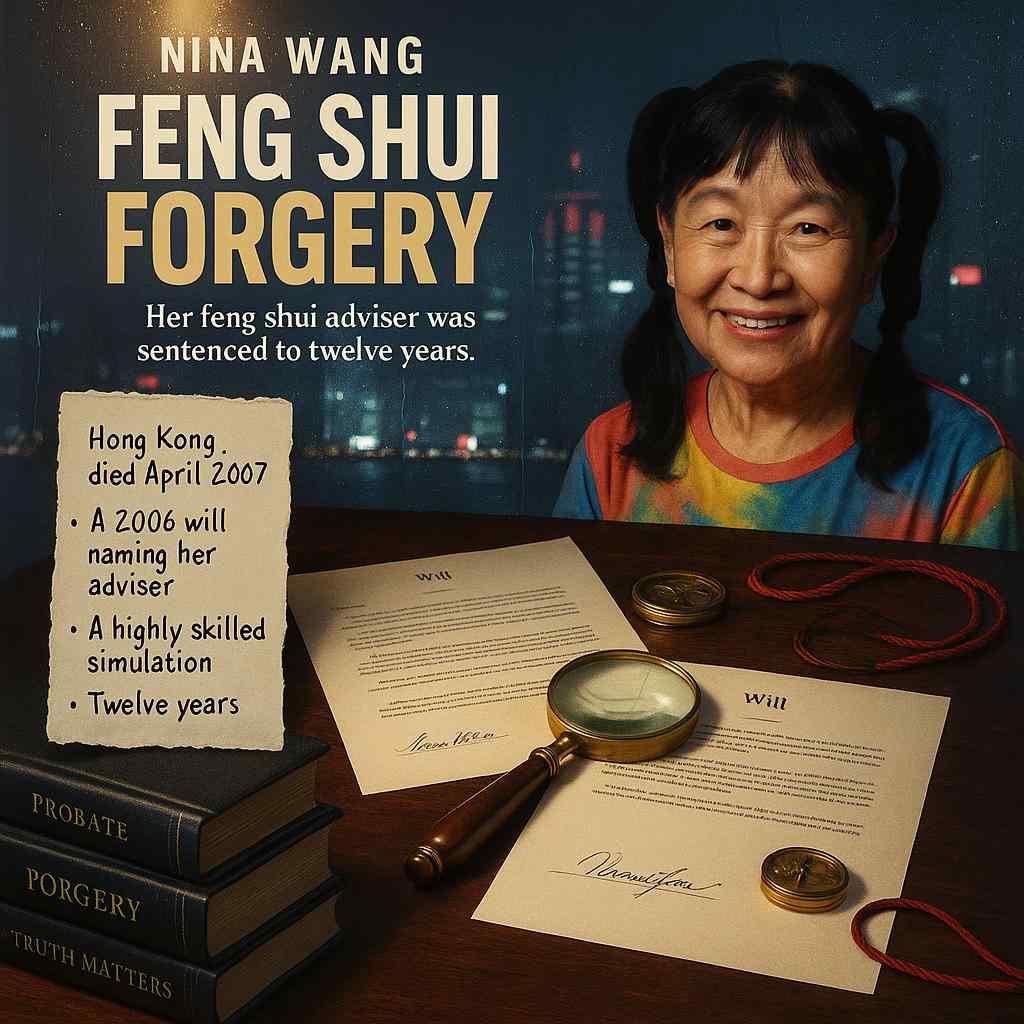
After Nina Wang’s death, a 2006 will surfaced leaving her fortune to her feng shui adviser, Tony Chan, while an earlier 2002 will named her charitable foundation. The court found the 2006 will’s signature was a highly skilled simulation, ruled for the foundation, and Chan was later convicted of forgery.
The Battle Over Nina Wang’s Fortune
Wang’s estate was massive, but what made the case remarkable was not just its size. After her death on April 3, 2007, two different wills came to light. The first, from 2002, left her wealth to the Chinachem Charitable Foundation. The second, dated October 16, 2006, named her feng shui adviser, Tony Chan Chun-chuen, as the sole beneficiary.
Both documents bore Nina Wang’s signature. Both sides claimed their document was genuine. The stakes could not have been higher.
Two Wills, Two Stories, One Signature
The dispute centered on which will was authentic. The 2002 will was straightforward, naming a foundation as beneficiary. The 2006 will, appearing shortly before Wang’s death, shifted everything to Tony Chan. It was this dramatic change—and the timing—that raised eyebrows.
To resolve the question, both sides brought in handwriting experts. Their job: determine whether the 2006 signature was truly Nina Wang’s, or a forgery crafted to look like it.
How Courts Examine Questioned Signatures
When a signature is disputed, a forensic document examiner compares it against known genuine examples. The examiner looks for natural variation—those small, unconscious differences that appear when someone signs their name repeatedly over time. A genuine signature almost never looks exactly the same twice. If a questioned signature appears unusually smooth, consistent, or mechanically perfect, that can be a warning sign.
In this case, the court described the 2006 signature as a “highly skilled simulation.” That means it was not a crude attempt to copy, but a careful, practiced imitation designed to withstand scrutiny. Skilled simulations are particularly challenging because they mimic the style and rhythm of the genuine signature, sometimes fooling even a trained eye at first glance. That’s why document examiners look beyond the surface: they analyze pen pressure, line quality, speed, and hesitation—details that are hard to fake, even for an expert forger.
The Verdict: A Simulation Exposed
After a lengthy civil trial, the Hong Kong court ruled in February 2010 for the Chinachem Foundation. The judge found Tony Chan’s testimony untruthful and unreliable, and described the 2006 signature as a “highly skilled simulation.” Chan’s appeals were dismissed, and in July 2013, a jury convicted him of forgery and using a false instrument. He was sentenced to twelve years in prison. Further appeals were refused.
This case is a reminder that a signature can look remarkably genuine on its face, yet still be a forgery. The court’s decision rested on careful expert analysis and cross-examination, not just surface appearance.
What Should You Do If a Will Is Questioned?
Cases like Nina Wang’s show why it’s important to act quickly and carefully when a signature or document is in doubt. If you’re facing a contested will or signature, keep the original document safe and avoid writing on it, stapling, or folding it unnecessarily. The sooner a qualified document examiner reviews the evidence, the more options you have. An early, thorough examination can make all the difference in a legal dispute.
Frequently Asked Questions
What happened in the Nina Wang will forgery case?
After Nina Wang died in 2007, two wills appeared—one from 2002 naming her charitable foundation, and another from 2006 naming her feng shui adviser, Tony Chan. The authenticity of the 2006 will’s signature was disputed.
When did the Nina Wang will dispute happen?
Nina Wang died in April 2007. The 2006 will was dated October 16, 2006. The civil trial ruling was in February 2010, and Tony Chan was convicted of forgery in July 2013.
What was the outcome of the Nina Wang will case?
The court ruled in favor of the Chinachem Charitable Foundation, finding the 2006 signature a highly skilled simulation. Tony Chan was convicted of forgery and sentenced to twelve years in prison.
Was the handwriting or document ever questioned, and what role did document examination play in the Nina Wang case?
Yes. Both sides called handwriting experts to examine the 2006 will’s signature. The court found it was a highly skilled simulation, which contributed to the ruling and later conviction.
How do document examiners analyze a questioned signature in a will dispute?
They compare the signature to genuine examples, looking for natural variation, pen pressure, line quality, speed, and signs of tracing or hesitation.
What should a family do if they suspect a will or signature is forged?
They should keep the original document safe, avoid altering it, and consult a qualified forensic document examiner as soon as possible.
If you’re dealing with a questioned will, signature, or document, Handwriting Experts Inc. can help. Visit HandwritingExpertUSA.com or call 1-800-980-9030.