Most people think a place as iconic as Graceland would be untouchable. But in 2025, Elvis Presley’s Memphis estate was almost auctioned off—not by force, but by paperwork. The story behind this near-miss is a lesson in how forged documents can threaten even the most famous properties.
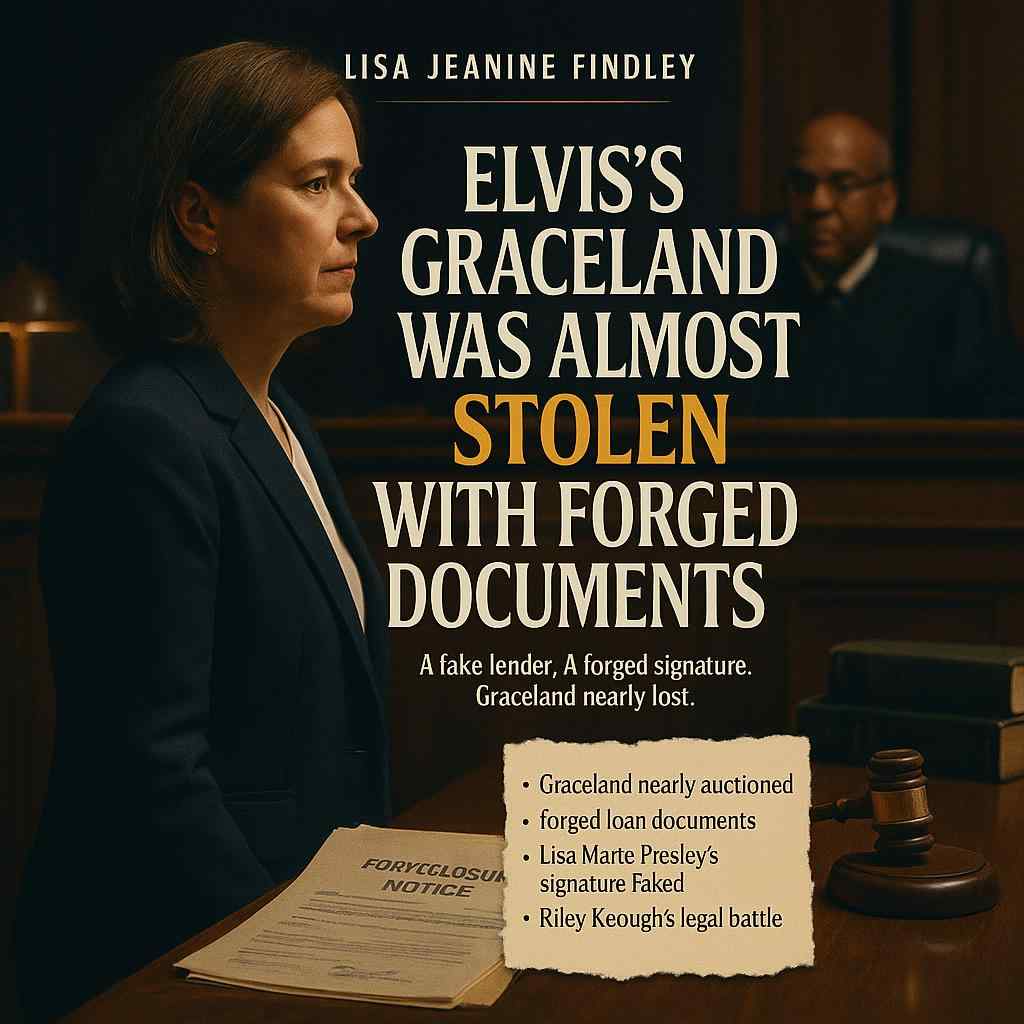
In 2025, Lisa Jeanine Findley tried to auction Graceland using forged loan documents and a fake lender. The scheme unraveled when a notary’s affidavit proved the signatures were fake, stopping the sale and sending Findley to prison.
How Did Graceland Almost Slip Away?
Lisa Jeanine Findley, a middle-aged woman from Missouri, orchestrated a complex fraud that nearly cost the Presley family their most famous asset. She invented a fictitious lender—Naussany Investments & Private Lending LLC—and created forged loan documents claiming that Lisa Marie Presley had borrowed $3.8 million against Graceland. Using these forgeries, Findley published a foreclosure notice in a Memphis newspaper, demanding $2.85 million to halt the sale and threatening to auction the property if the debt wasn’t paid.
The plot was bold. It relied on the power of official-looking paperwork and the assumption that no one would question the signatures or the lender’s legitimacy. For a moment, it looked like Graceland might actually go under the hammer.
What Exposed the Forgery?
The unraveling began with a detail that’s easy to overlook: the notary signature. Findley had forged not only Lisa Marie Presley’s signature, but also that of a Florida notary public, Kimberly Philbrick. When the documents surfaced, Philbrick provided an affidavit swearing she had never met Lisa Marie Presley nor notarized any documents for her.
This sworn statement cast immediate doubt on the authenticity of the paperwork. It was the forensic detail that broke the case wide open. Once the notary’s signature was proven fake, the entire scheme began to collapse.
How Did the Presley Family Respond?
Riley Keough, Lisa Marie’s daughter, took swift legal action. She sued to stop the foreclosure and protect her family’s legacy. The court responded by halting the auction. As the investigation unfolded, Findley’s story shifted. She attempted to blame a foreign scam ring for the plot, but the evidence pointed squarely back to her.
In February 2025, Findley pleaded guilty to mail fraud. By September, she was sentenced to over four years in prison. The Presley family kept Graceland, but the close call remains a stark reminder of how vulnerable even well-known estates can be to document fraud.
What Would a Document Examiner Look For in a Case Like This?
In a case involving forged signatures and fake documents, a forensic document examiner would focus on several key details. First, they’d compare the questioned signatures to known genuine examples, looking for natural variation versus signs of tracing or simulation. They’d also examine the ink, paper, and printing methods to spot inconsistencies.
The notary’s role is especially important. A real notary’s signature and seal are unique and traceable. If a notary claims they never met the signer, that’s a major red flag. Document examiners also assess the chain of custody—how the document moved from one person to another—to ensure nothing was altered along the way.
In this case, it was the notary’s sworn affidavit, rather than a handwriting analysis, that directly exposed the fraud. But in many situations, a detailed examination of signatures and documents can provide crucial evidence.
What Can Families and Attorneys Learn from Graceland’s Close Call?
This case is a clear warning: even the most established estates can be targeted by sophisticated fraud. If you’re dealing with high-value property or important documents, verify every signature and notary. Keep original documents safe, avoid writing or stapling over them, and get a forensic examination early if anything seems off.
Frequently Asked Questions
What happened in the Lisa Jeanine Findley Graceland forgery case?
Lisa Jeanine Findley created forged loan documents and a fake lender to claim that Lisa Marie Presley had borrowed money using Graceland as collateral. She published a foreclosure notice, attempting to auction Graceland and demand millions from the Presley family.
When did the Graceland forgery scheme take place?
The scheme unfolded between 2023 and 2025, with the attempted auction and legal proceedings taking place in Memphis, Tennessee.
What was the outcome of the Graceland forgery case?
Riley Keough sued to stop the foreclosure. A judge halted the auction, and Lisa Jeanine Findley pleaded guilty to mail fraud in February 2025, receiving over four years in prison by September 2025.
Was the handwriting or document ever questioned, and what role did document examination play in the Graceland case?
Yes, the authenticity of the signatures was questioned. The case turned on a notary public’s affidavit stating her signature had been forged, which exposed the fraud. A handwriting analysis is not mentioned as the deciding factor in this case.
How can a forensic document examiner detect a forged signature or fake document?
A forensic document examiner compares questioned signatures to genuine ones, looks for natural variation, and examines ink, paper, and chain of custody for inconsistencies.
What should someone do if they suspect a will or property document is forged?
They should keep the original document safe, avoid altering it, and consult a forensic document examiner early to assess authenticity.
Why is verifying a notary’s signature important in legal documents?
A notary’s signature and seal confirm the identity of the signer. If a notary denies notarizing a document, it casts serious doubt on its authenticity.
If you’re dealing with a questioned will, signature, or document, Handwriting Experts Inc. can help. Visit HandwritingExpertUSA.com or call 1-800-980-9030.