He died five years ago. He’s still in court — trying to take her house.
Before he died, a man filed a prenuptial agreement at the Monroe, Louisiana courthouse — backdated to 1991 — leaving his son to pursue his ex-wife’s property in court a quarter century after the marriage. Bart Baggett was brought in as the forensic document examiner to analyze the document. What he found had nothing to do with handwriting: the paper itself wasn’t manufactured until 2001. Paper manufacturers embed security watermarks that can be traced back to the exact year of production, but that database isn’t publicly available — access requires court-qualified forensic expert credentials. When the physical materials of a document postdate the document by ten years, signature analysis becomes secondary. The paper is the evidence.
[0:00] — The case: a fake prenuptial agreement filed to punish an ex-wife from the grave[1:20] — The discovery: paper manufactured a decade after the document’s claimed date
[1:54] — How watermark tracing works — and why only court-qualified experts can access it
[2:21] — Why this evidence closes the case before signature analysis even matters
[4:07] — Bart’s standard: he only testifies when the evidence actually supports the client
How a Dead Man Tried to Steal His Ex-Wife’s House — And How a Watermark Stopped Him
I don’t usually travel to Monroe, Louisiana. But when a courthouse is fighting over a fake prenuptial agreement and a woman’s house is on the line, I make the trip.
Here’s the case. A man — I’ll call him Mr. Black — died about five years ago. Before he died, he did something calculated: he created a prenuptial agreement, backdated it to 1991, and filed it with the courthouse. The agreement essentially said that when he died, his ex-wife would have to return the house and certain assets. Then he died and left his son to execute the plan.
Twenty-five years after the marriage, that son is in court trying to repossess the ex-wife’s home.
They hired me to look at the signatures.
That’s usually where I start. The question was whether the signatures on the prenuptial agreement were forged. And they very well may have been. But that turned out not to be the most important finding.
What I found instead was simpler — and more damning.
The paper didn’t exist yet.
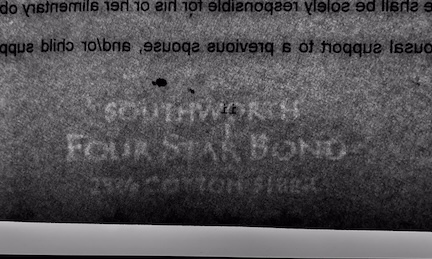
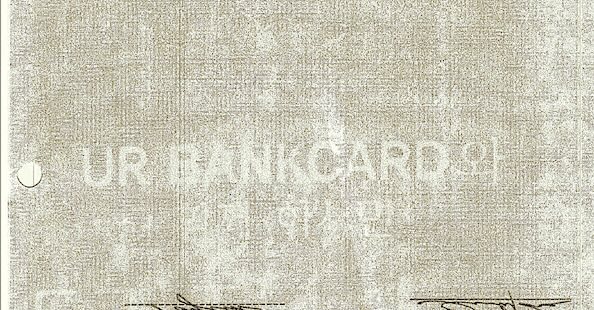
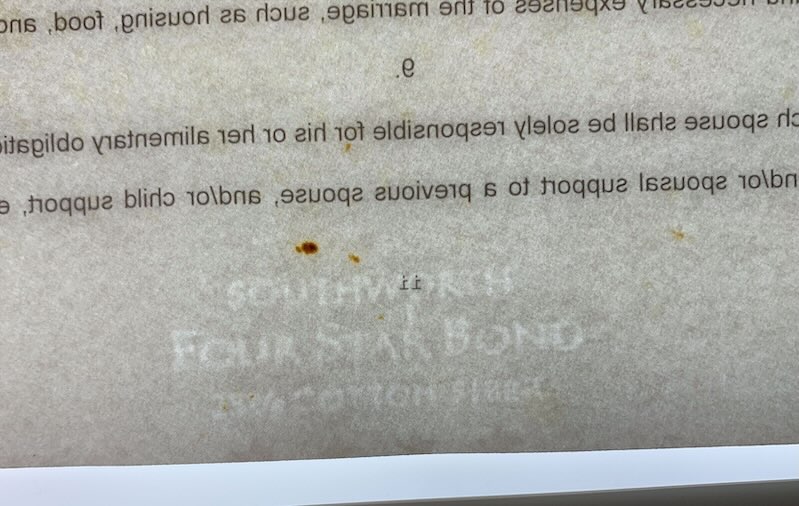
The prenuptial agreement was purportedly signed in 1991. But when I examined the document under a light box, I found a watermark embedded in the paper itself. Paper manufacturers have used security watermarks for decades — and those watermarks can be traced back to the exact year the paper was produced.
This particular paper wasn’t manufactured until 2001. Ten years after the document was supposedly signed.
That’s not a signature question anymore. That’s a physical impossibility.
How watermark tracing actually works
This isn’t something you can Google. The database that links watermarks to manufacture dates isn’t publicly available. You have to be a court-qualified forensic document examiner to access it — the kind of credentials that come from years of casework, judicial acceptance, and working alongside law enforcement forensic labs.
When I’m retained on a case, part of my examination is always the document itself — not just what’s written on it, but what it’s made of. Paper age, ink chemistry, watermarks, staple rust patterns, printer toner dating — these are all legitimate forensic tools, and they sometimes tell a cleaner story than handwriting ever could.
In this case, the watermark tells the whole story. The document could not have been signed in 1991 because the paper it was printed on didn’t come off the manufacturing line until 2001.
What happens now
When the judge hears this, when the jury hears this, it’s over. There’s no expert on the other side who can make 2001 paper exist in 1991. The physics don’t allow it.
I don’t know why the son’s legal team hasn’t settled. But that’s why courts exist.
As for the woman whose house is at stake — she’s been dealing with this for years. She had a difficult marriage, a vindictive ex-husband, and now a stepson carrying the fight forward from the grave. What she needed was evidence that couldn’t be argued with. That’s what I’m there to provide.
If you’re facing a disputed document
Whether it’s a will, a lease, a contract, or an agreement that doesn’t look right — the evidence is either there or it isn’t. A forensic document examiner’s job is to find it and present it in a way that holds up in court.
If you have a document you believe was forged, altered, or backdated, the place to start is a case review.
? 1-800-980-9030
? HandwritingExpertUSA.com
Bart Baggett is a forensic document examiner and expert witness who has testified in 138 court cases across federal, civil, criminal, probate, and international jurisdictions, with a 100% judicial acceptance rate.
#ForensicDocumentExaminer #DocumentForgery #PrenuptialFraud #ProbateLitigation #ExpertWitness #ForgeryDetection #EstateFraud #LegalEvidence #HandwritingExpert #BartBaggett #DocumentExaminer #ForensicScience #WillContest #CourtroomEvidence #ForgeryExpert #SignatureVerification
FAQ :
Q1: How can a forensic document examiner prove a document was backdated?
A1: By examining the physical materials of the document, not only the
writing on it. In this Louisiana case, the prenuptial agreement was
purportedly signed in 1991, but examination under a light box revealed
a security watermark embedded in the paper. That watermark traced to
paper manufactured in 2001 — ten years after the claimed signing date.
When the materials postdate the document, the date is a physical
impossibility.
Q2: Can anyone look up a paper watermark to find its manufacture date?
A2: No. The database that links security watermarks to their year of
manufacture is not publicly available. Access requires credentials as a
court-qualified forensic document examiner — credentials built through
years of casework, judicial acceptance, and work alongside law
enforcement forensic labs.
Q3: What else does a forensic document examiner analyze besides signatures?
A3: The examination covers the document itself, including paper age,
ink chemistry, watermarks, staple rust patterns, and printer toner
dating. These are legitimate forensic tools that can sometimes tell a
cleaner story than handwriting analysis alone.
Q4: What should I do if I believe a will, contract, or agreement was forged?
A4: The place to start is a case review. A forensic document examiner’s
job is to determine whether the evidence of forgery, alteration, or
backdating is actually there, and to present those findings in a form
that holds up in court. Case reviews can be requested at
1-800-980-9030 or HandwritingExpertUSA.com.